
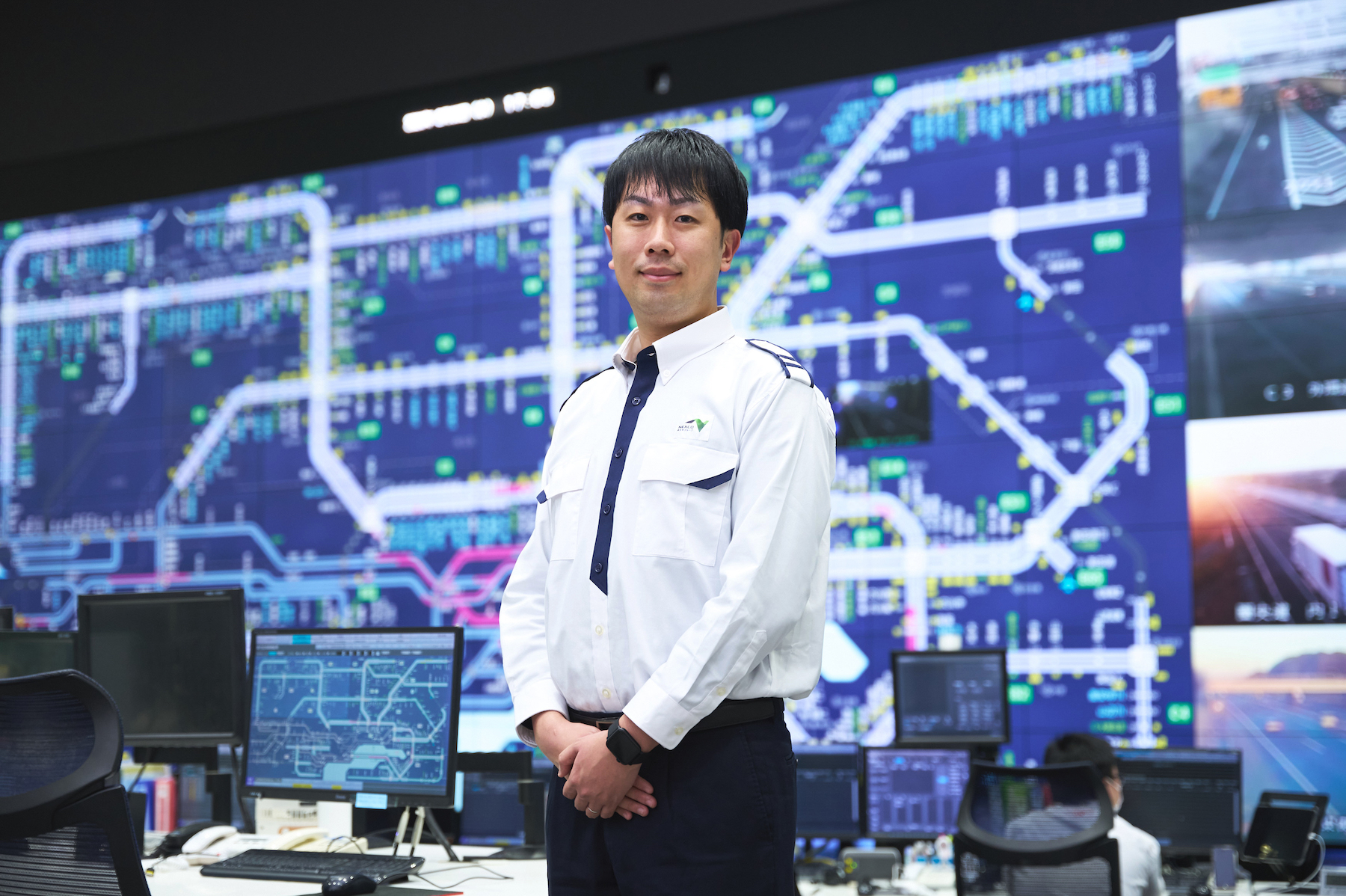
To keep our ordinary daily lives going
The mission of the road control center to support the safety of Expressway
Did you know that there are "road control centers" located near Expressway that monitor traffic flow 24 hours a day, 365 days a year?
This time, we interviewed Komei Someya, a traffic controller at NEXCO EAST 's Kanto Regional Head Office Road Control Center, the largest road control center in Japan. We delve into the little-known operations and technologies of this road control center, which handles approximately 100,000 abnormal events annually.
We also spoke in detail with Mr. Someya, who is essentially the command center that keeps daily transportation running and contributes to a prosperous life, about his thoughts and outlook as he experiences them on a daily basis.
I joined the company in April 2018. I was assigned to the Takasaki office and worked in the field as part of the traffic management team (patrol team).
In January 2023, I was transferred to the Road Control Center and began working as a traffic controller.
The road control center's network and technology resolve approximately 100,000 abnormal incidents annually.
What kind of facility is a road control center on Expressway?
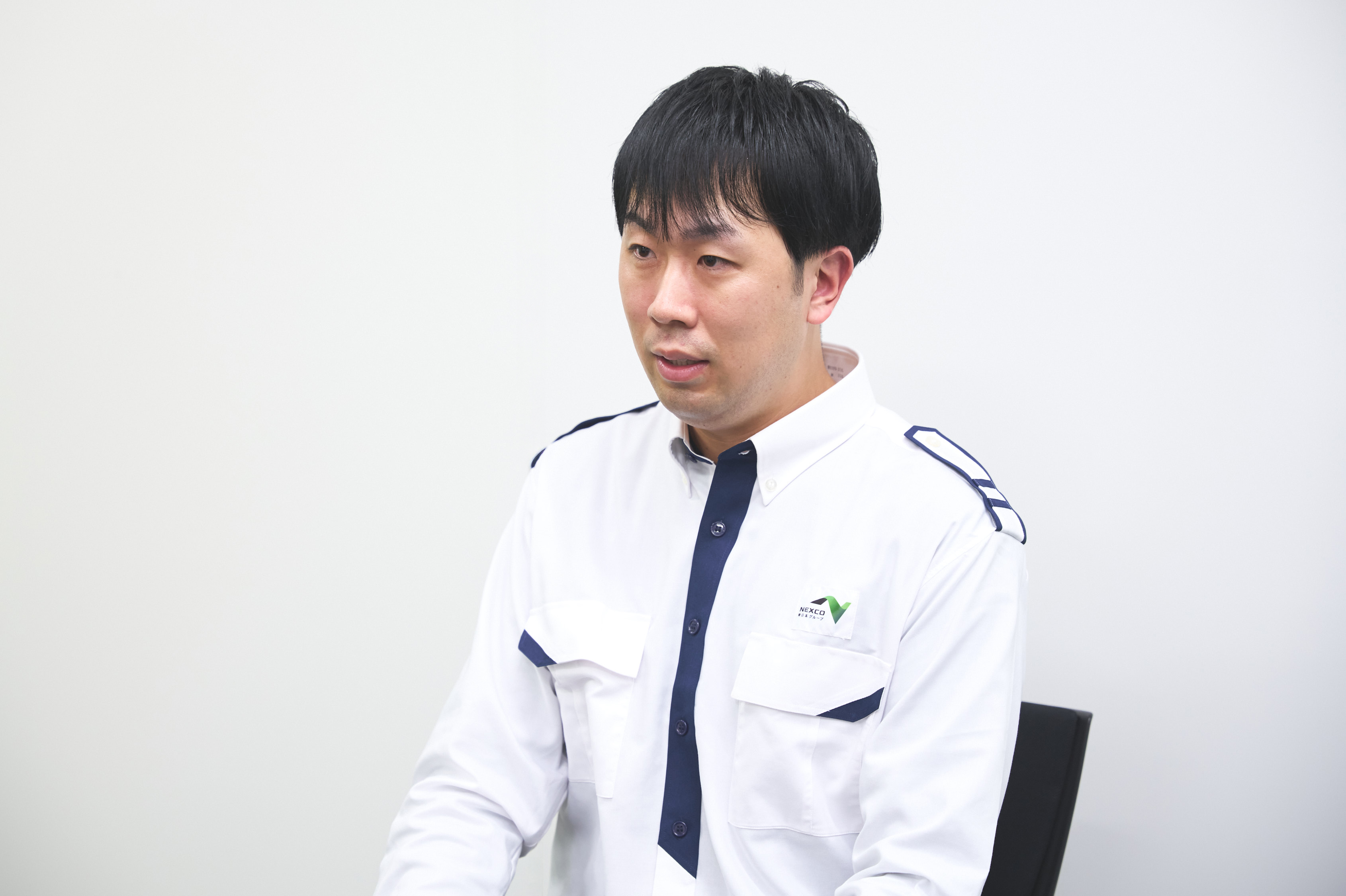
Specifically, what kinds of cases do you most often handle?
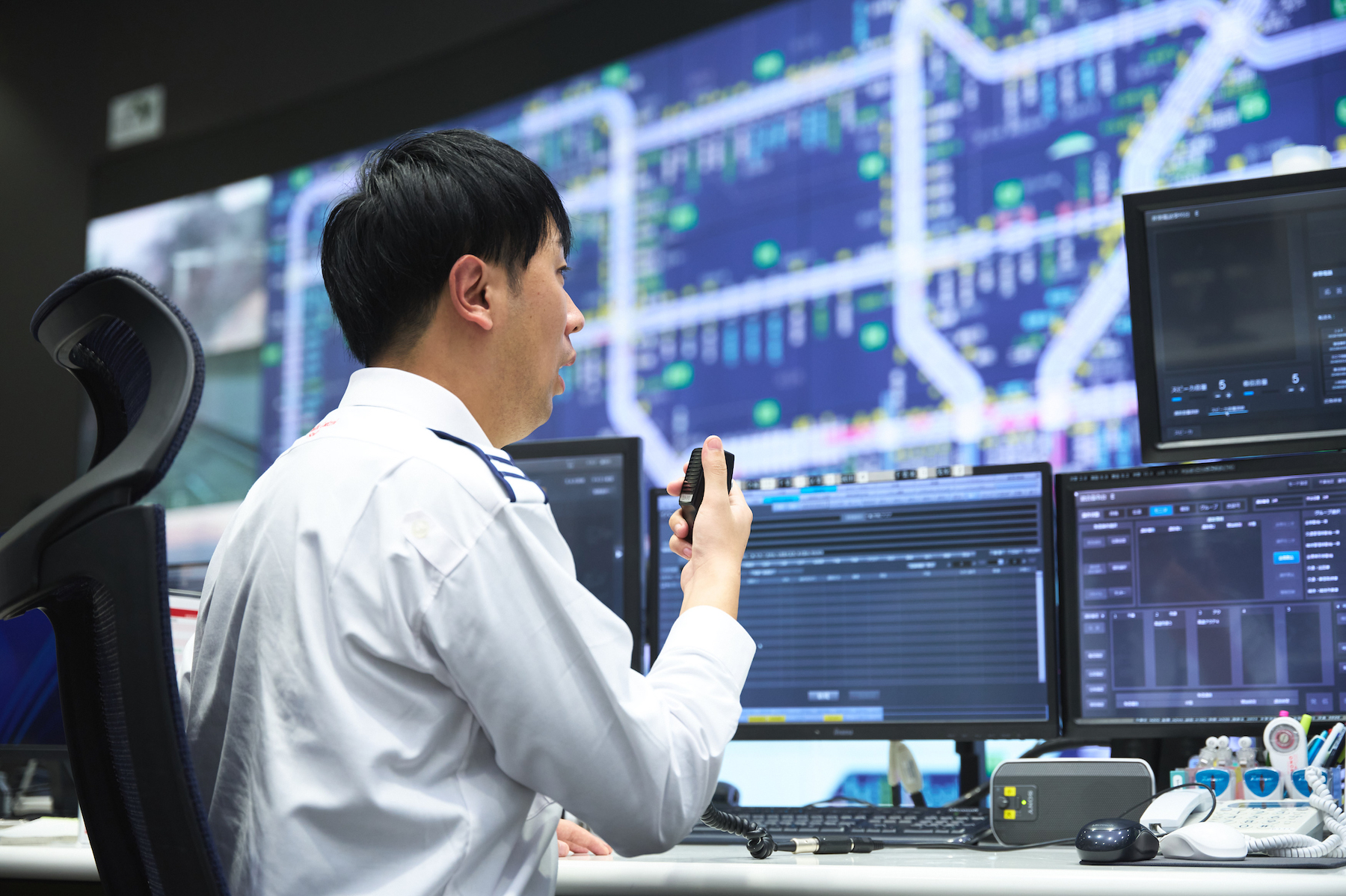
Dealing with falling objects is an everyday occurrence. Especially on windy days, the tarpaulins covering the backs of trucks can fly off. Customers who see this often contact us using the emergency phones on Expressway or the road emergency hotline (#9910). The people on the other end of those phones are none other than us, the traffic controllers.
So that phone call connected to everyone, huh? By the way, how many people are on the monitoring team?
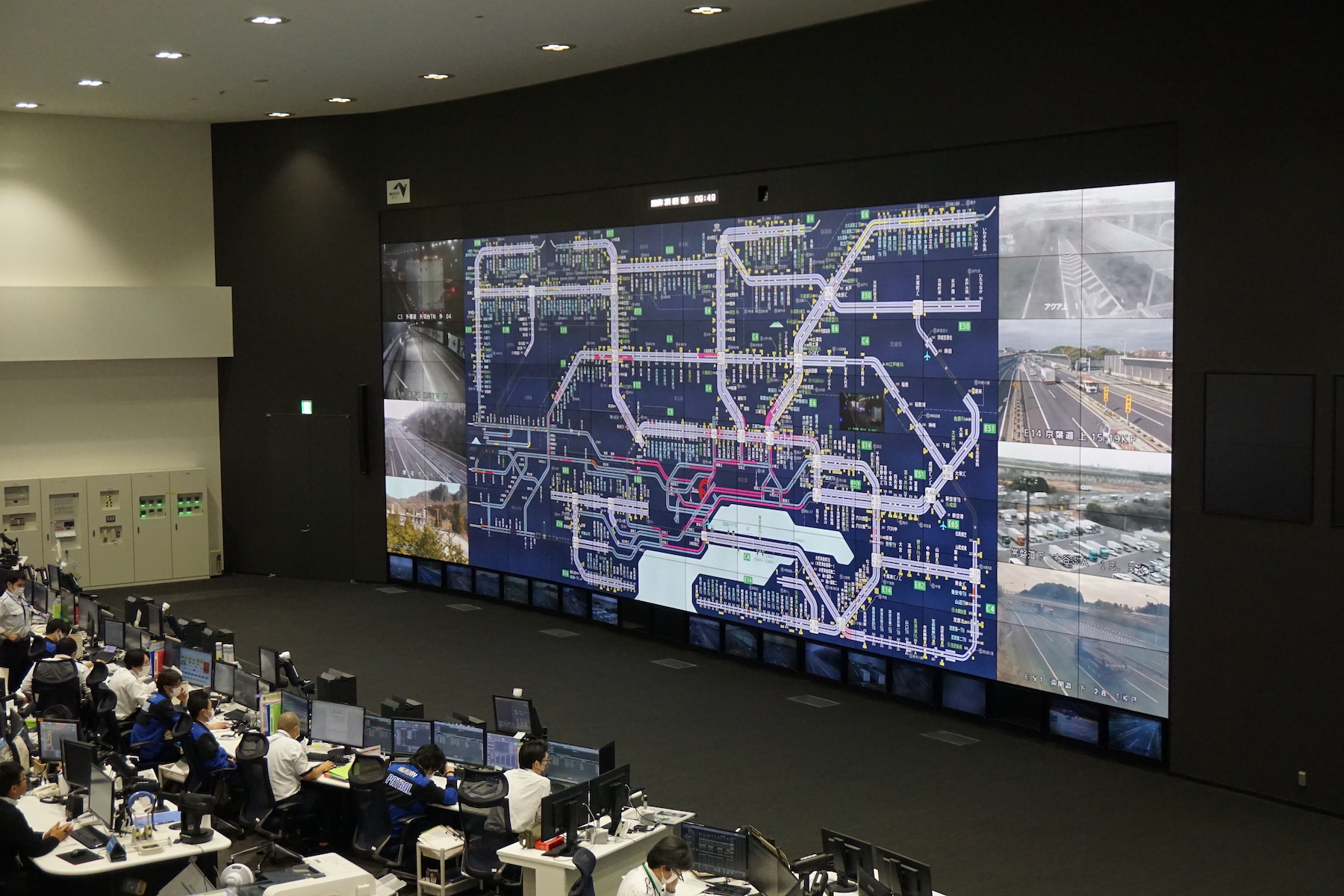
The basic structure consists of 12 controllers, 2 liaison officers, and 2 leaders called air traffic controllers. The controllers are organized into four teams of three, working together to accurately assess each incident.
I had the opportunity to see the road traffic control center in person, and it truly gave me the impression of a "command center"! Our company has four such control centers, but are there any differences between them depending on the region?
These are located in each of our four Regional Head Office: Hokkaido, Tohoku, Niigata, and Kanto. While the scope of work isn't drastically different, the characteristics vary by area. For example, in snowy regions, there's a significant difference in traffic volume between the ski season and other seasons, but Kanto is always congested, so unusual incidents are more likely to occur there.
Could you please tell me again about the size of the road control center at the Kanto Regional Head Office?
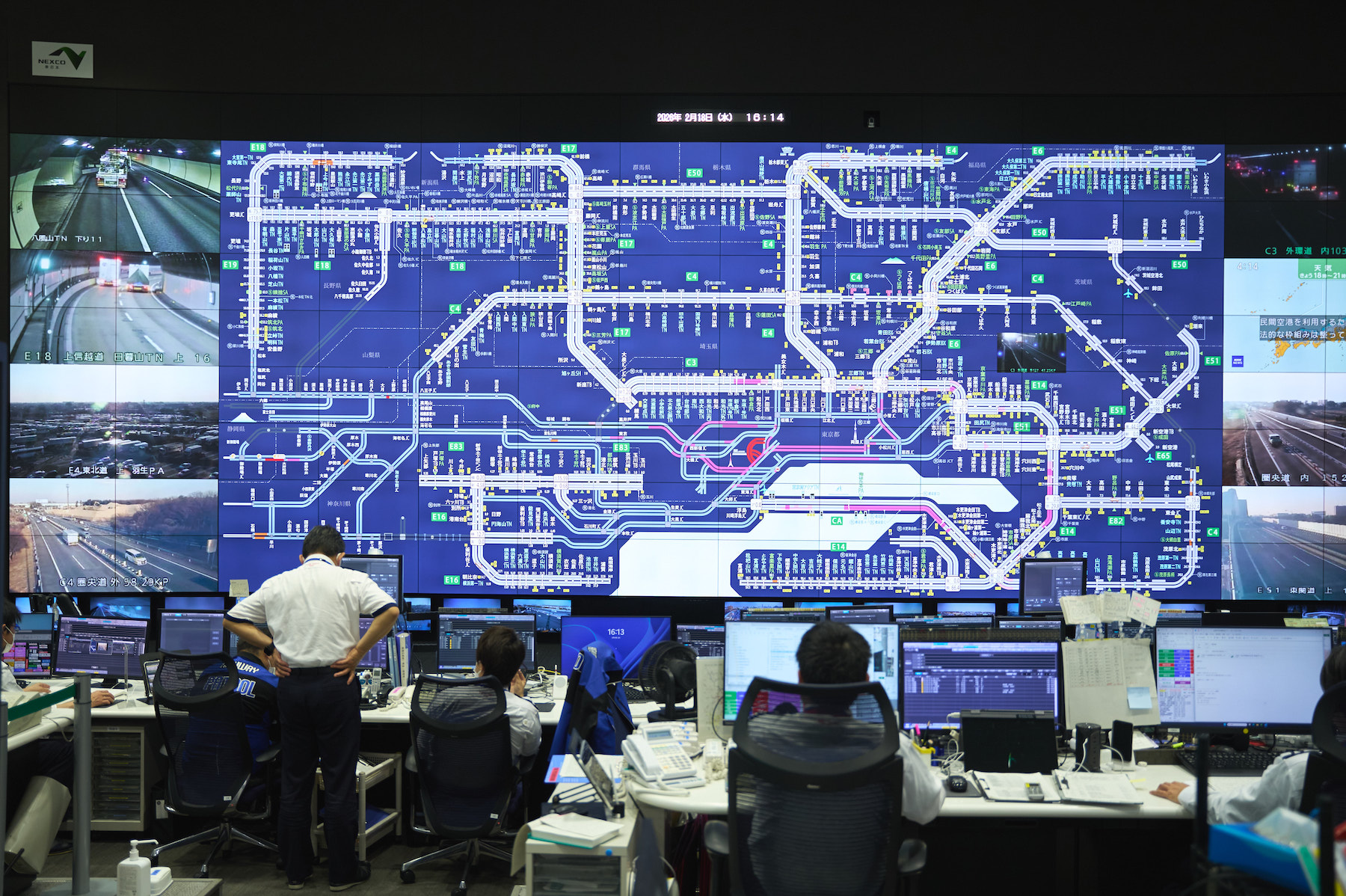
The Kanto Regional Head Office' Road Control Center is one of the largest control facilities in Japan, managing 20 roads and approximately 1,400 km of road traffic. Because the volume of traffic on roads under the Kanto Regional Head Office' jurisdiction accounts for about 70% of NEXCO EAST 's total service area, the frequency of incidents is significantly higher, with the center handling approximately 100,000 incidents annually, or about 300 incidents per day.
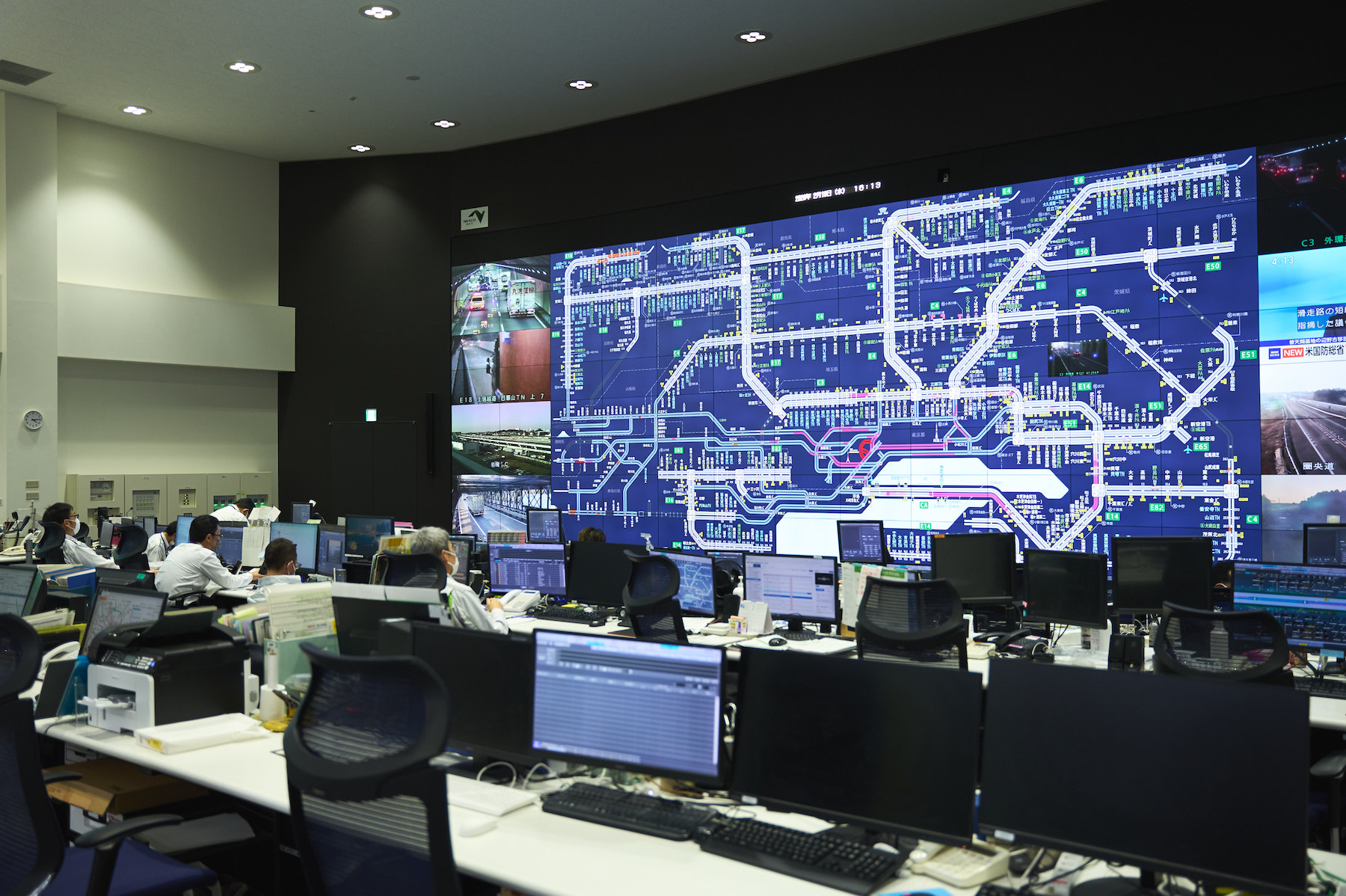
Furthermore, the Kanto Regional Head Office 's Road Control Center underwent a complete renovation in 2016. In addition to improved earthquake resistance and enhanced fire prevention functions, a helipad for disaster preparedness and a large display measuring 5.5m high by 17m wide, the largest of any road control center in the country, were newly installed.
It's a truly dynamic display, isn't it? So much information is being shown!
The display centrally shows route maps, camera footage from various locations, and information on traffic congestion and accidents. It allows for an overview of traffic conditions across the vast Kanto area, and can also fix the display of specific video feeds as needed. This enables more accurate and rapid traffic control operations.
Are there any other technologies that you find useful in your work, Mr. Someya?
As a traffic controller, I find the vehicle location management system, which utilizes digital radio and GPS, to be extremely helpful.
This allows NEXCO EAST to track the locations of all its patrol cars and snow/ice removal vehicles in real time, enabling them to instantly determine and issue instructions on which vehicle can reach the scene first in the event of an emergency.
Previously, a significant amount of time was spent simply exchanging information wirelessly, but advancements in the system have drastically reduced the workload, allowing us to focus on our core control operations.
Air traffic control operations are evolving, from manual to digital. Will there be further updates in the future?
Yes, a demonstration experiment aimed at realizing a "next-generation Expressway" is scheduled to begin in the second half of fiscal year 2026 on a section of Tohoku Expressway. Even though digitalization has been progressing for some time, the current situation still relies heavily on human reports to detect abnormal events.
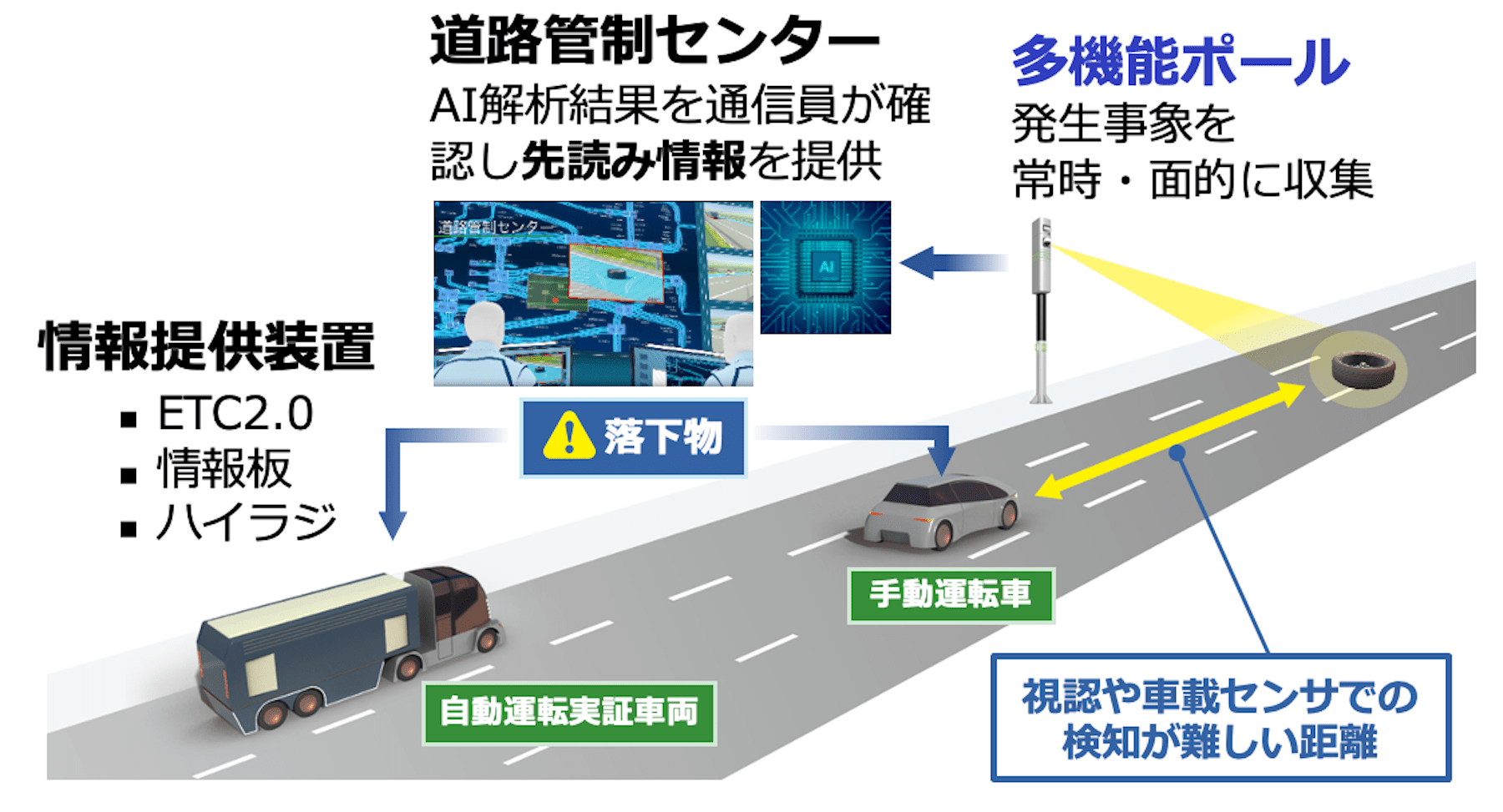
NEXCO EAST aims to automate the detection of abnormal events. We want to realize control operations that utilize technology, such as "multifunctional poles" that quickly collect road information such as fallen objects and abnormal events.
After gaining experience in the field, I became the traffic control officer I'd always dreamed of being. The moment I feel the most fulfillment is when I write "Processing complete."
Why did you choose to become a traffic controller, Ms. Someya?
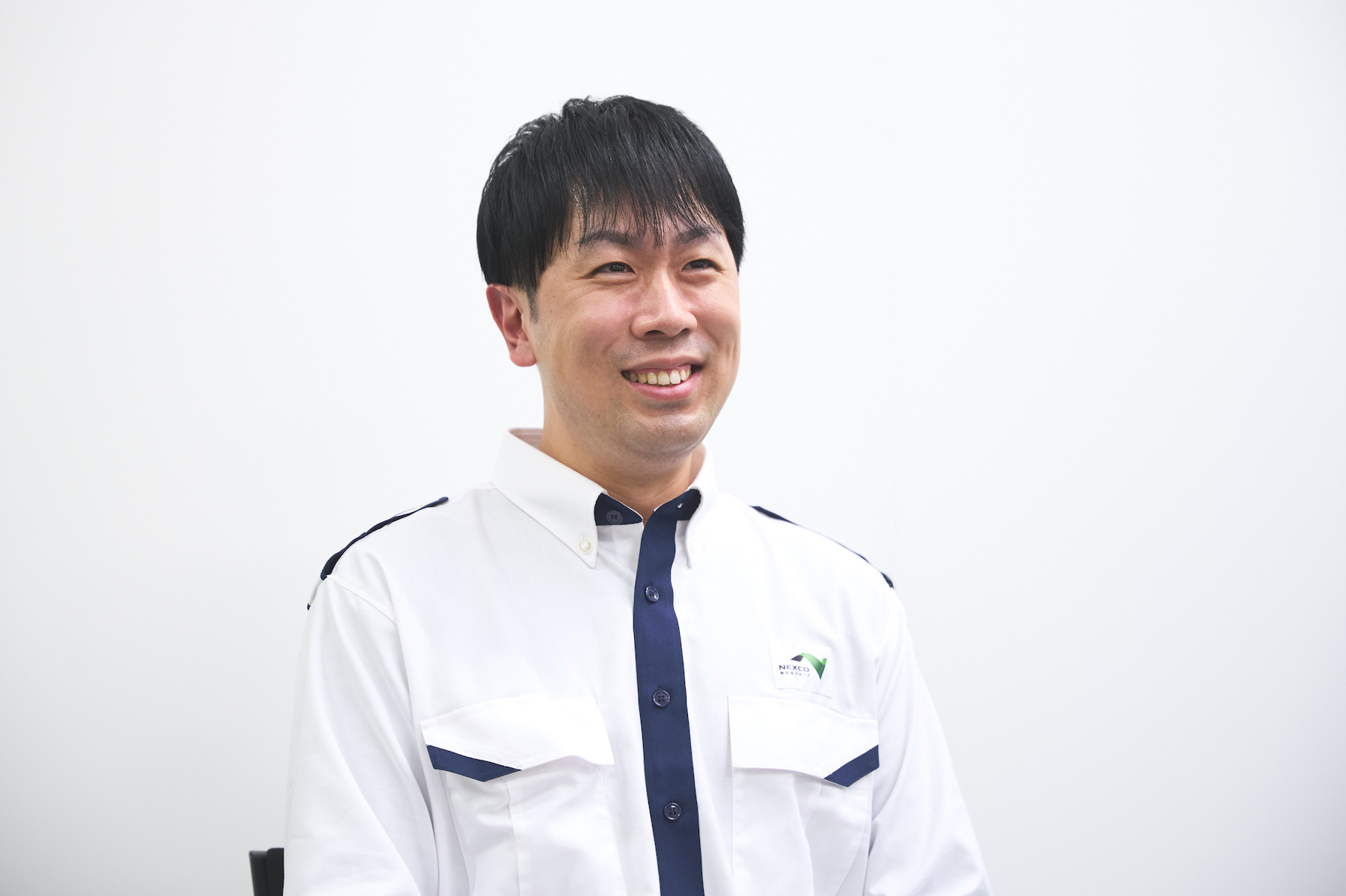
I've always admired that position ever since I joined the company! The way they exchange information with various departments and give precise instructions from a place like a command center is just plain cool, isn't it?
That's a direct hit! It certainly looks like a scene from a drama, and it's really cool.
That's right. However, to work at the road control center, I first needed to understand the field, so I started out in the patrol team. After that, my dream came true and I was able to come to this place. I'm doing the job I've always dreamed of, and I enjoy it every day.
I'm so glad your dream came true! On the other hand, being a traffic controller is a high-pressure job, so I imagine there were some tough days...?
Yes, that's right. I'll never forget a snowy day when I hadn't even been transferred for a year. It started snowing earlier than forecast that day, and we began closing off roads, but then customers' cars got stuck or got into accidents... We had as many as 20 incidents in just one hour.
While dealing with a constant stream of phone calls and radio transmissions, I was forced to prioritize where to send our limited number of patrol cars. It was a situation that could easily cause panic, but a mistake in judgment at the road control center could be a matter of life and death. I calmly dealt with each situation one by one, consulting with the controllers around me.
That's one case every three minutes... it's unimaginable. How do you prioritize which cases to handle?
"How can we prevent the next accident?" is our primary criterion for decision-making. First, we address incidents on the road lanes rather than the shoulder. Also, since fallen objects pose a very high risk of causing accidents, we prioritize requesting the patrol team to handle the removal of fallen objects, depending on the situation.
That's true. It's important not to let the situation escalate. In the case of an accident, what kind of questions do you ask?
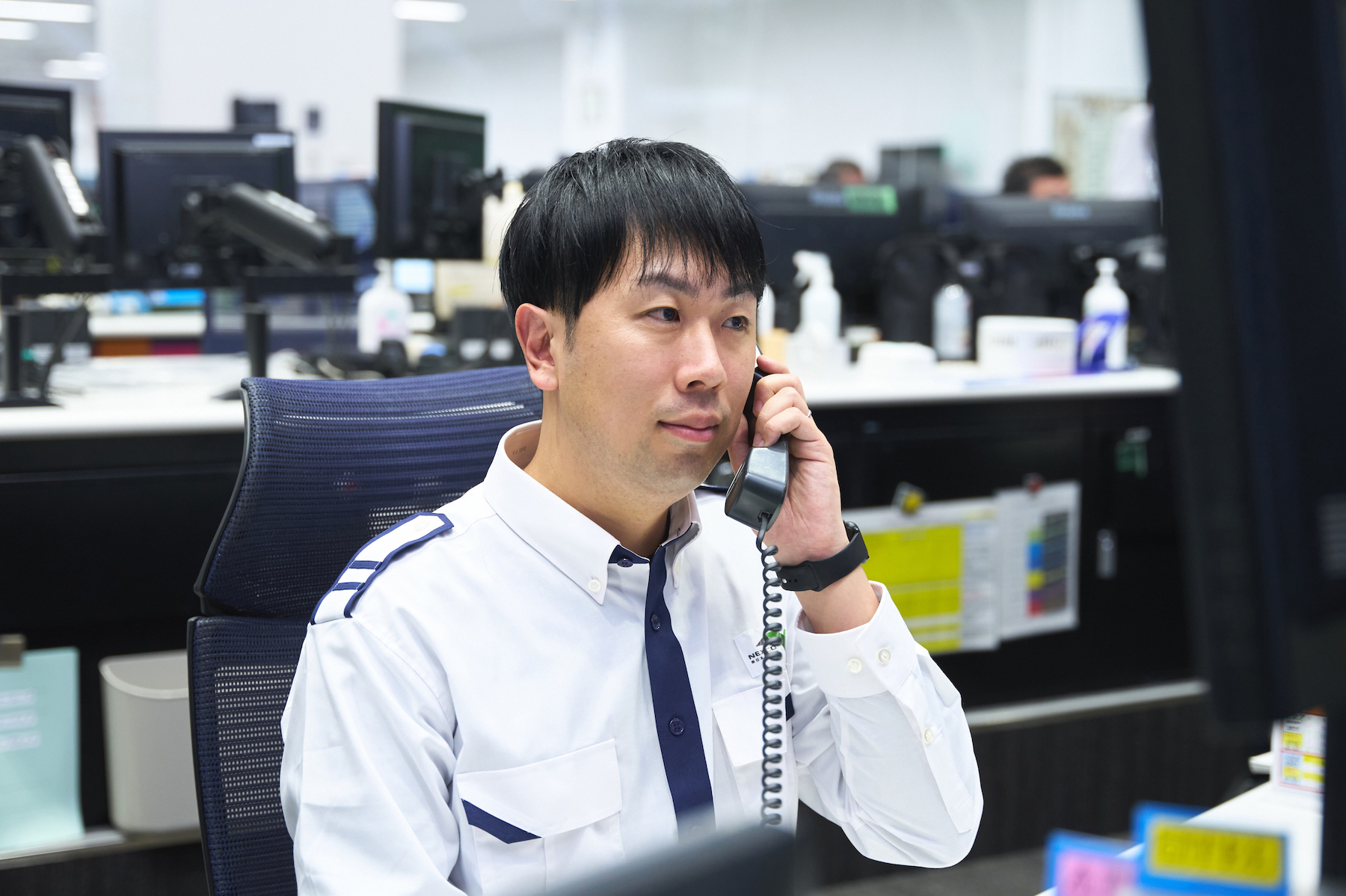
First, we'll check for any injuries. After that, we'll ask about things like whether the vehicle can pass and whether it's in a condition to move.
In such situations, customers you speak to on the emergency phone may be in a panic. Is there anything you keep in mind when you speak to them?
First and foremost, we make sure to reassure our customers by saying things like, "Are you alright?" and "Are you hurt?" No matter how anxious our customers may be, it's important for us to remain calm and composed in our response.
The job of a traffic controller requires constant composure, but what do you find rewarding about this job, and what motivates you, Ms. Someya?
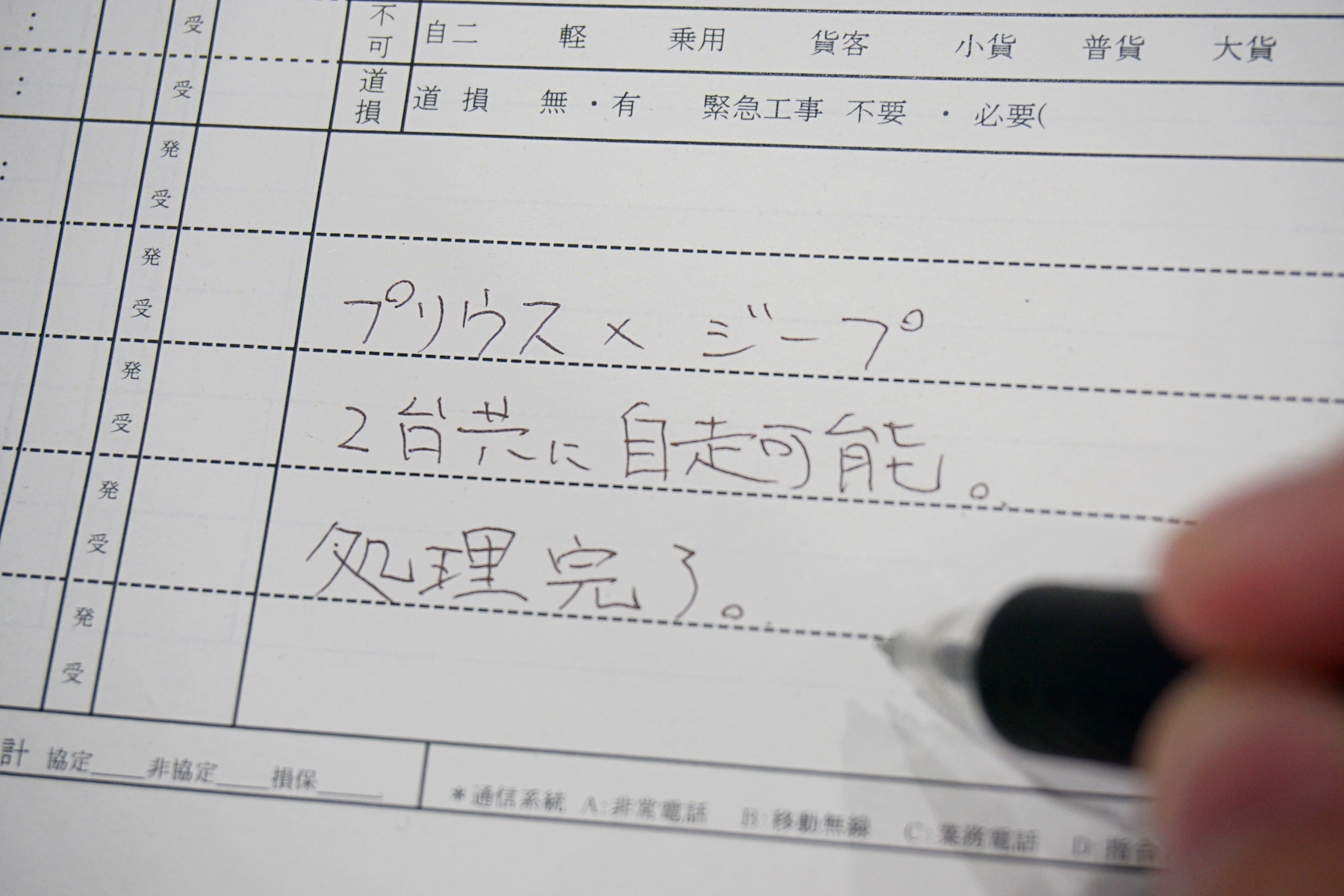
The greatest sense of accomplishment comes when I've finished dealing with an accident or traffic jam and can write "Processing Complete" at the end of the report. This "Processing Complete" is a record that all responses have been completed and that there is no longer any danger to customers.
It's a relief to see the tense situation return to normal and the vehicles start moving again. My driving force is the sense of mission to keep the everyday transportation and daily life running without interruption.
Finally, as a traffic controller, do you have anything you'd like to say to readers who use Expressway?
There's a saying, "The trip isn't over until you get home," and the same applies when using Expressway to and from leisure destinations. It would be a shame if your fun outing was ruined by an accident or breakdown.
Long holidays and Golden Week, in particular, see many people driving for the first time in a while, making them seasons prone to accidents. We hope you'll drive safely and create wonderful memories!
summary
Behind the smooth flow of traffic on Expressway, a road control center single-handedly manages information from a vast network, making flawless decisions where every second counts.
Even at this very moment, the road control center continues to power transportation and improve people's lives, and it can truly be called the "brain of Expressway."
Safe driving is paramount, but in the unlikely event of an accident or encountering fallen objects, remain calm and contact the road emergency hotline (#9910). Traffic controllers will respond calmly, quickly, and compassionately to ensure your safety and peace of mind.
The Road Control Center is a facility that monitors the conditions of Expressway 24 hours a day, 365 days a year without interruption, ensuring the safety and security of our customers.
In the event of an accident, falling debris, or other abnormal incident on Expressway, we immediately gather information, coordinate appropriately with patrol teams, police, and fire departments, and disseminate information to our customers via information boards and social media, striving to resolve the situation as quickly as possible. Depending on the situation, we also respond flexibly to a wide range of arrangements, from restoration work to towing.
If the on-site patrol teams, often referred to as "yellow patrol cars," are the "eyes" of Expressway, then the control center is the "brain" that gathers that information and makes decisions. The close cooperation between the two ensures the safety of Expressway.