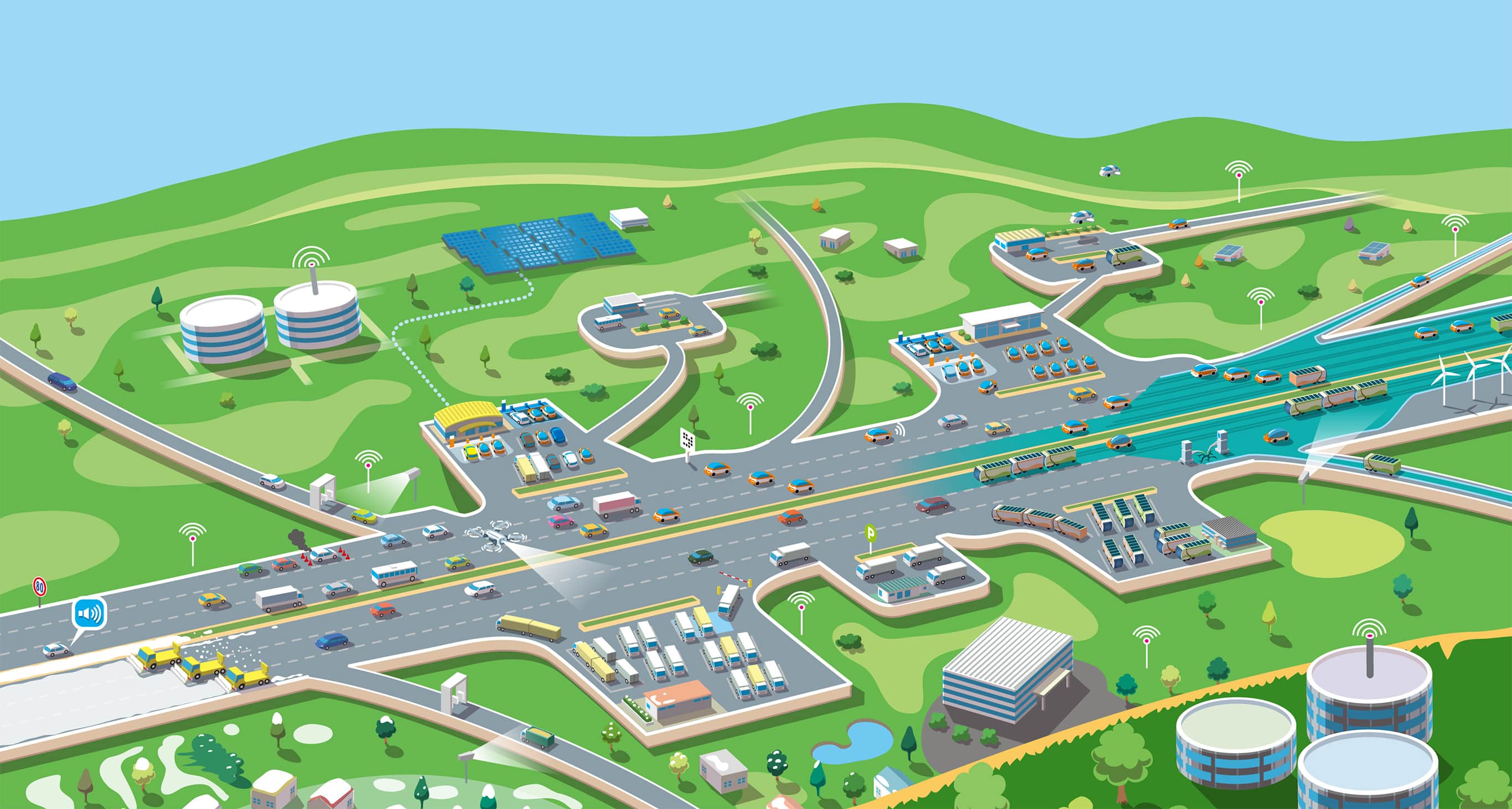
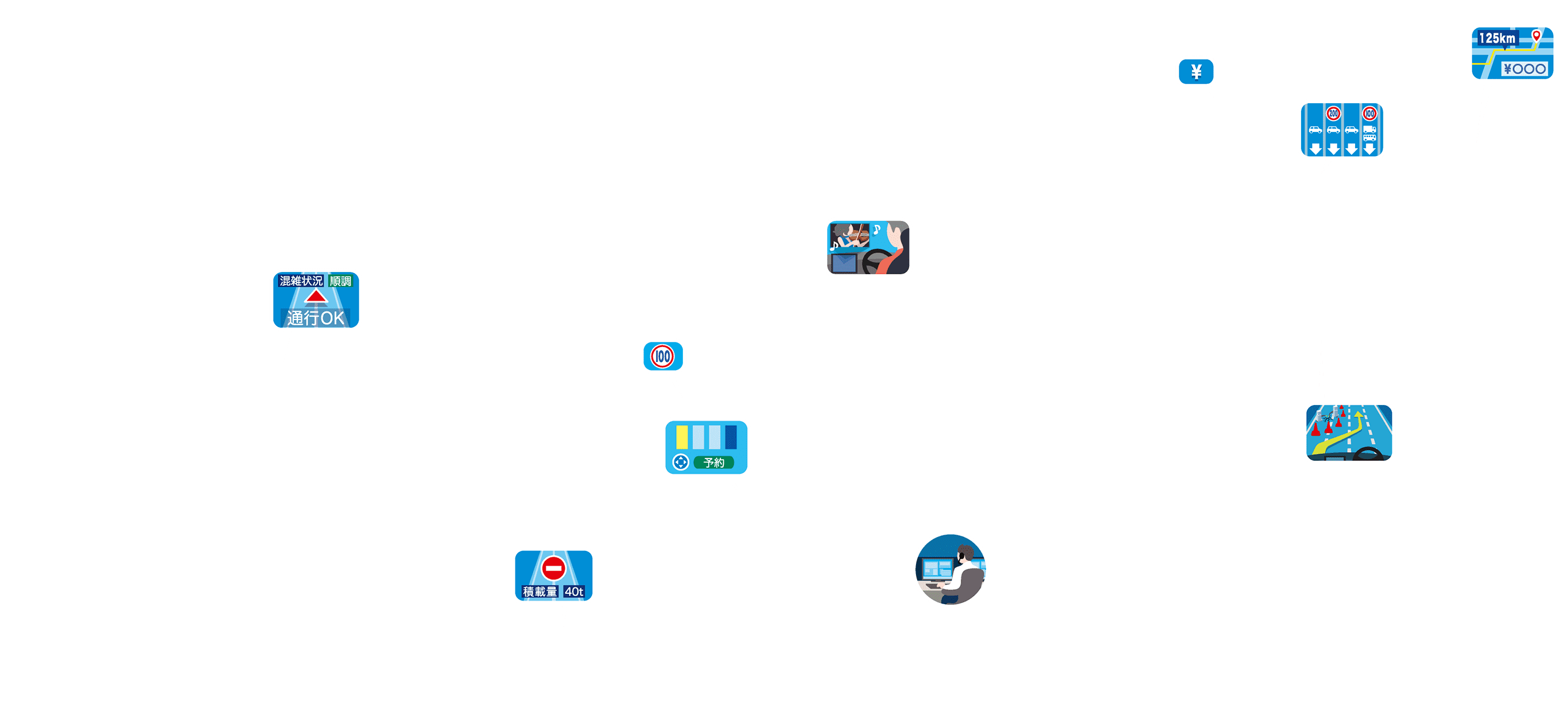
ICT and robotics, Utilizing ever-evolving technology, In the future, 10 or 20 years from now, What functions and services does Expressway provide? Should it be provided? Here, NEXCO EAST thinks Part of the vision for the "next-generation Expressway" I've put it all together in an illustrated map! So what will Expressway of the future look like? Let's take a closer look at the map!
Other projects and Click here to see the project movie
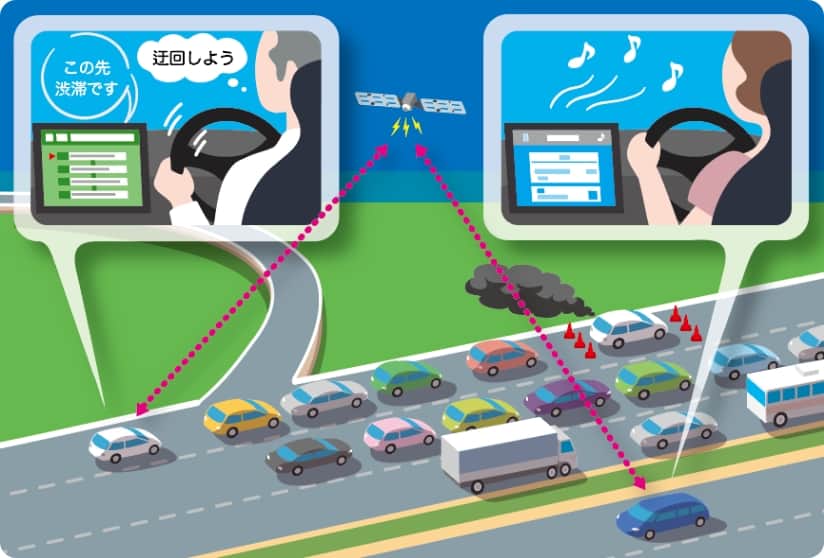
This next-generation Expressway radio works in conjunction with GPS to deliver traffic information for your destination based on your driving location, regardless of where you are on the highway. For example, if there is an accident or fallen debris approximately 1 km ahead in your direction of travel, it can send out emergency information via push notification. In addition, road traffic information is provided in multiple languages to ensure that a diverse range of customers can use Expressway with peace of mind.
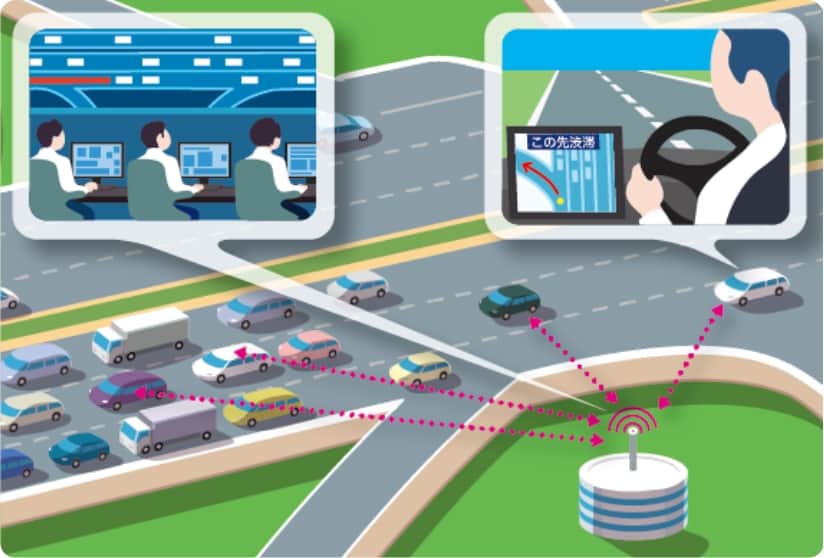
Probe data Anomaly detection
By collecting probe data (vehicle data such as driving history such as speed, braking, and hazard lights) from many vehicles traveling on Expressway and aggregating and analyzing it at the road control center, the possibility of an accident or falling objects can be detected early. It is also possible to immediately provide warning information to vehicles traveling nearby.
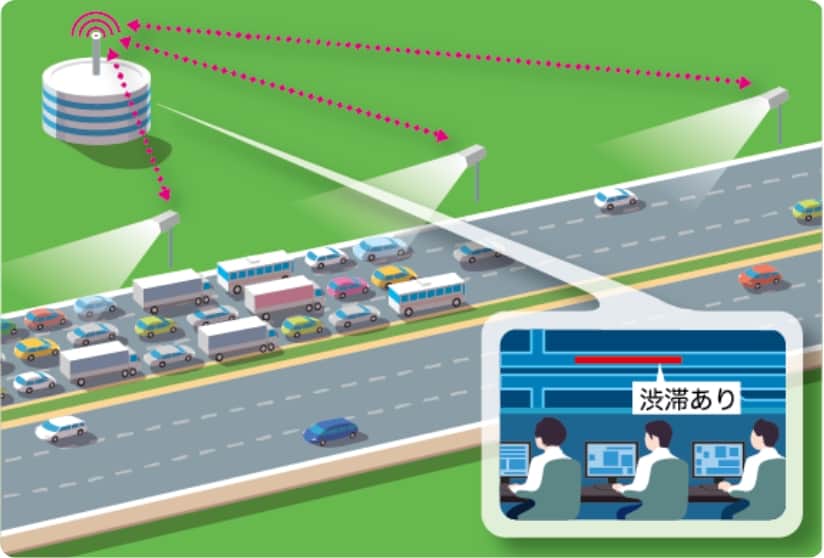
Real-time full line monitoring
Using cameras and sensors installed on the roadside of Expressway, the condition of Expressway is constantly monitored 24 hours a day, 365 days a year. Furthermore, the vast amount of accumulated image, video, and sensor data is analyzed using AI and other technologies to automatically and highly accurately detect abnormalities. Traffic congestion information, fallen objects, and other abnormal events are quickly identified, allowing road managers to respond quickly and providing information to drivers, allowing them to drive safely and comfortably.
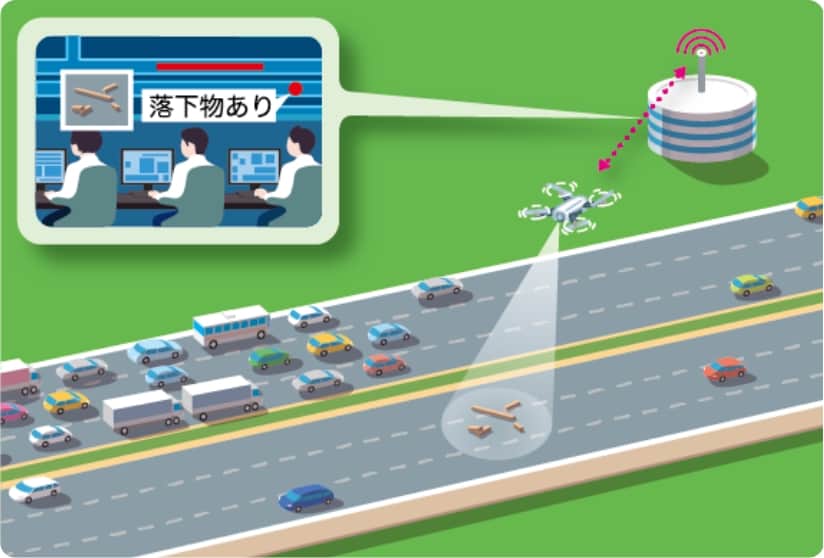
drone patrol
In addition to patrolling Expressway with conventional patrol vehicles, drones will be used to inspect traffic and road conditions. Drones will be used to monitor traffic flow and accidents from the sky, and by sharing this information with the road control center in real time, damage and congestion conditions can be accurately grasped in a short amount of time.
Parking for large vehicles
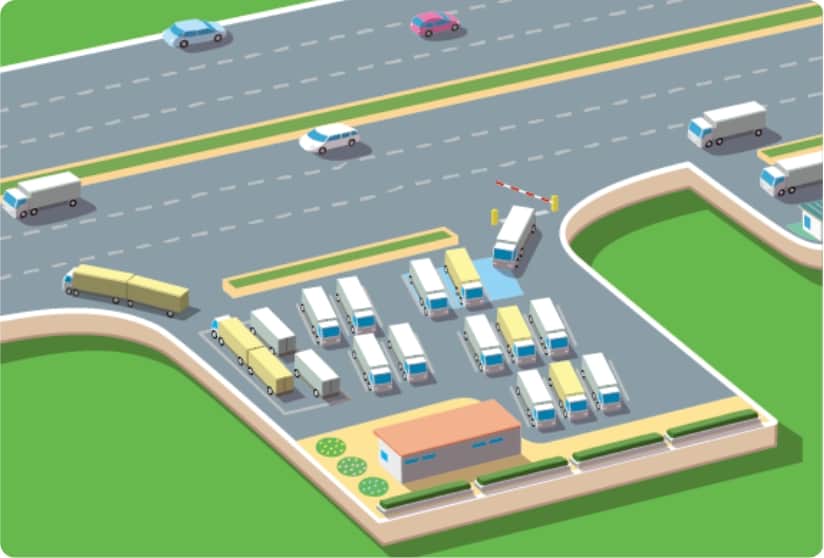
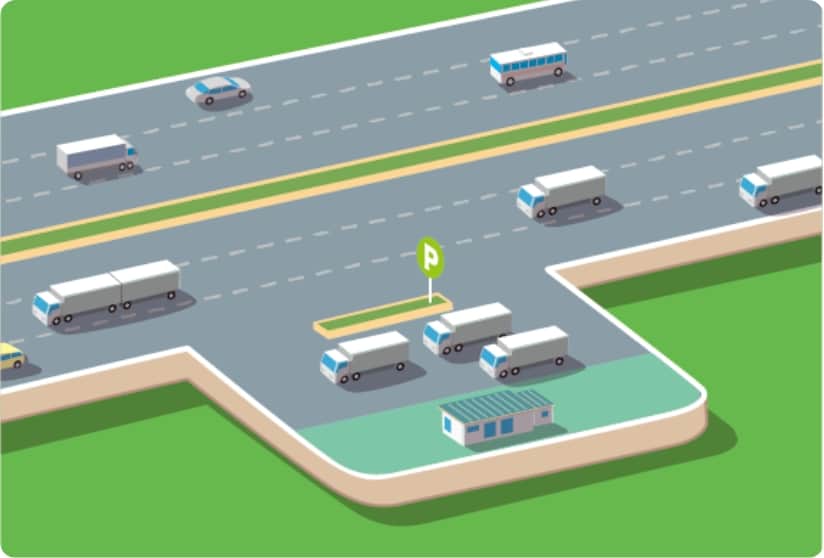
By establishing parking areas exclusively for large vehicles, we will be able to alleviate congestion at other service and parking areas, while also making it easier for long-distance drivers to find a place to rest. In addition, interchanges and rest areas will be designed to allow drivers to travel between both directions, and are expected to be used as bases for driver changes.
Innovative Mobility Services
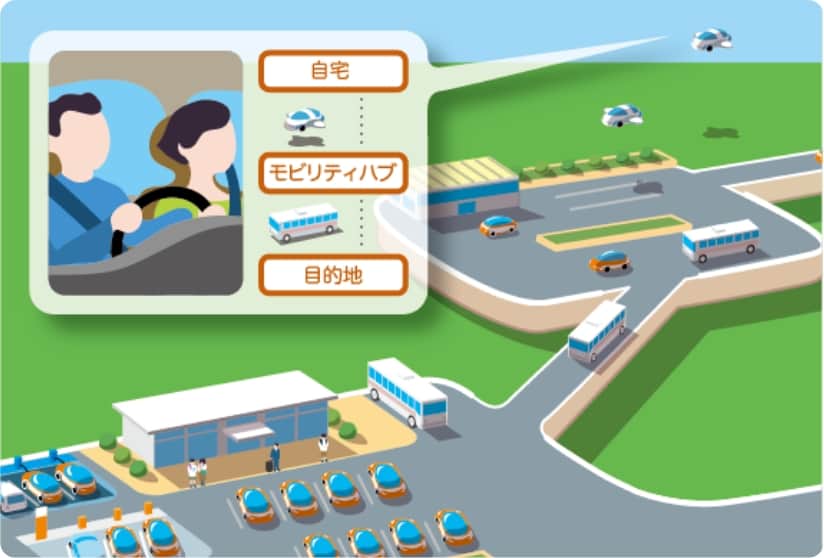
We will develop facilities for buses and other public transportation, takeoff and landing areas for flying cars, and in the future, entrances and exits that will allow service and parking areas to exit onto Expressway. In addition, by developing mobility hubs (highway bus terminals) where you can transfer to transportation methods that connect Expressway to your destination, it will be easier to switch from buses to rental cars, allowing for smooth travel to your destination.
self-driving sign
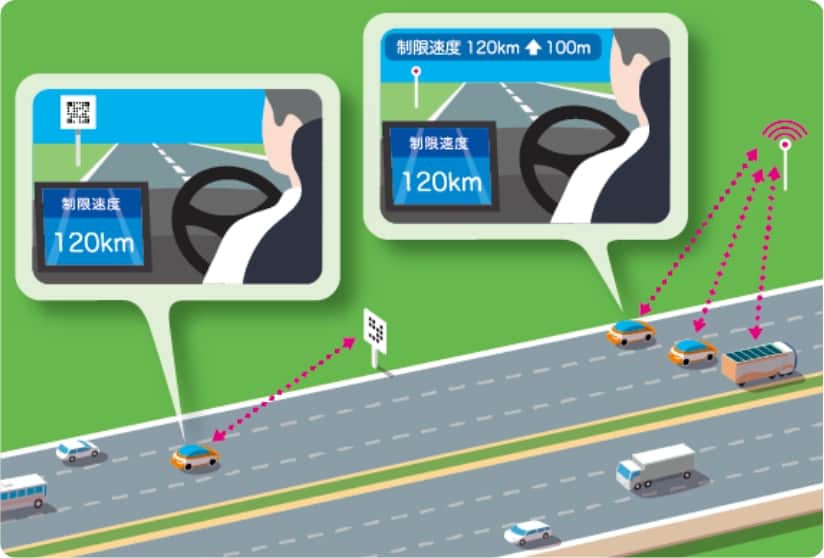
As autonomous driving technology evolves, the nature of Expressway signs will also evolve. We are considering changing from current signs that convey minimal visual information to signs that vehicles can read and recognize (QR codes, IC tags, etc.). In the future, we will build a system that eliminates physical installations and allows vehicles to virtually understand sign information.
Reserved parking space
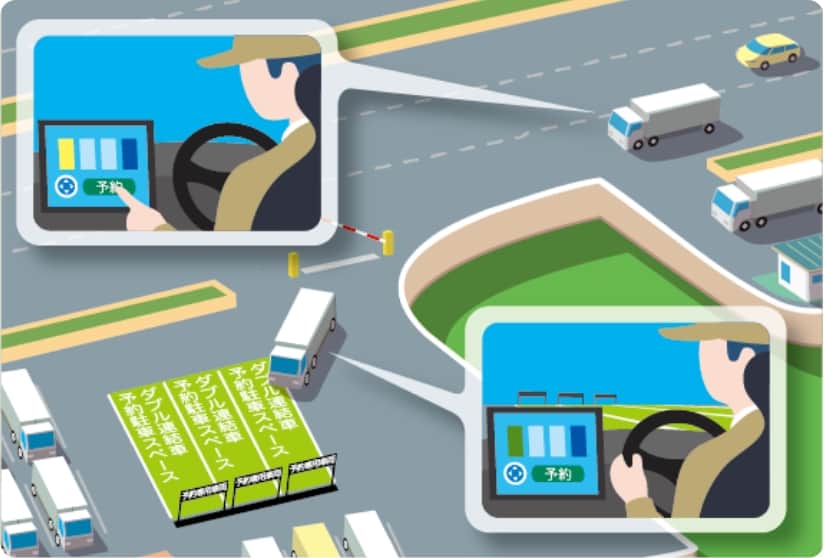
This system allows drivers to reserve parking spaces at service areas and parking areas in advance. The availability status of each parking space is monitored in real time and reflected in the system, allowing for efficient operation of parking spaces. This ensures drivers can park at service areas and parking areas to ensure they have time to rest, making Expressway even more convenient.
Autonomous driving lane
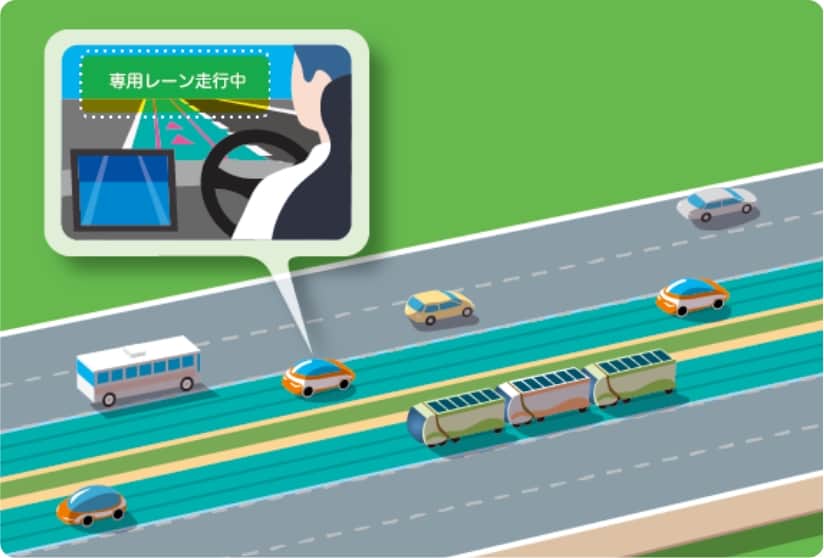
One lane of Expressway will be designated as a lane for platooning of autonomous vehicles and logistics vehicles, creating an environment where safe and smooth driving is possible. Prior to the construction of the dedicated lane, a demonstration experiment field (model section) is planned to be developed.
Compact PA for idle facilities
We will make effective use of currently unused bus stops and main line toll barriers on Expressway, renovating them so that they can be used as parking spaces. This will increase the number of places where people can stop their vehicles and take a break, even if they are not service areas or parking areas, making Expressway safer and more convenient.
Logistics MaaS
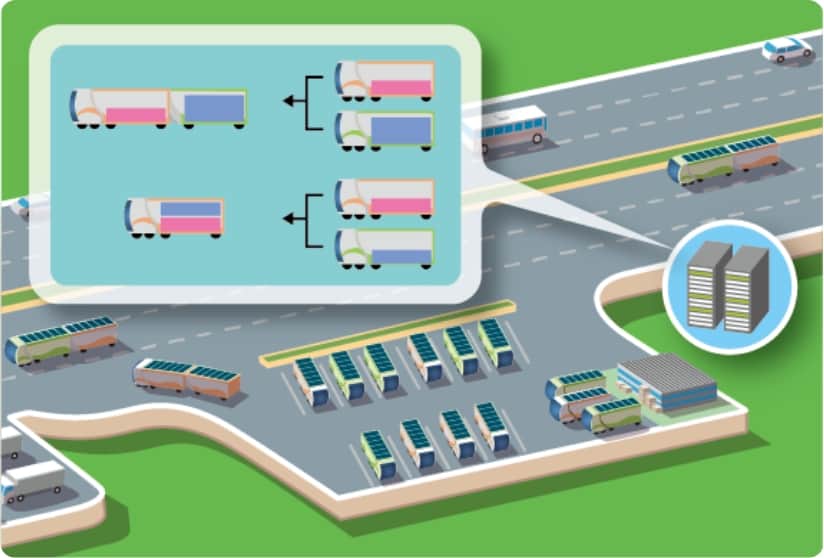
In order to promote the efficiency of logistics, we will establish logistics relay points that will serve as bases for forming and disbanding double-articulated trucks and platooning. By utilizing ETC information, we will support appropriate operation management by collecting vehicle entry and exit information and providing it to businesses.In addition, at logistics bases, we will build a system to match cargo with vehicles and manage logistics by understanding driver availability, cargo type, final destination, and vehicle availability.
Valet parking
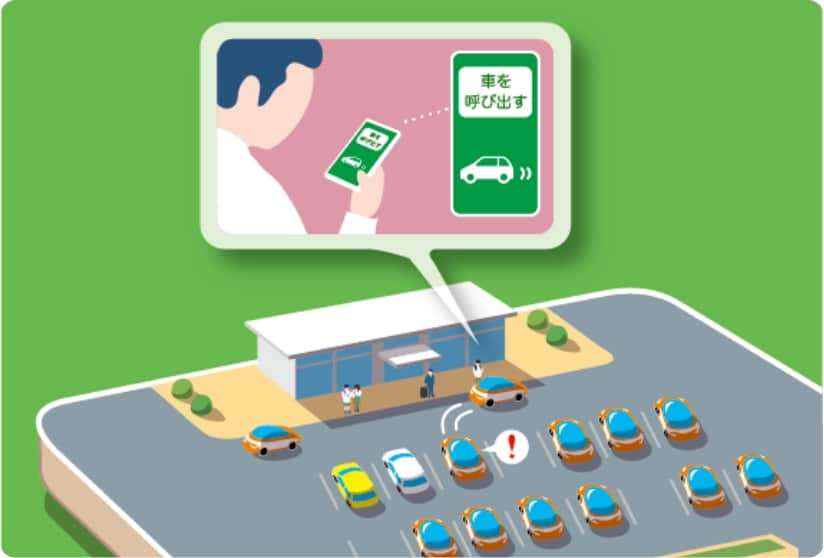
Valet parking is a system where, when you get out of your car at a designated location in a service or parking area, the vehicle will automatically drive and park in the parking space. This fully utilizes the functions of the autonomous vehicle, allowing drivers to enjoy their rest time in comfort without having to search for an available space themselves. When you want to leave, you can call the vehicle from inside the rest facility, and the vehicle will come to the designated location. With automated parking, fewer people coming and going means less parking space is required, leading to an increase in the number of cars that can be parked.
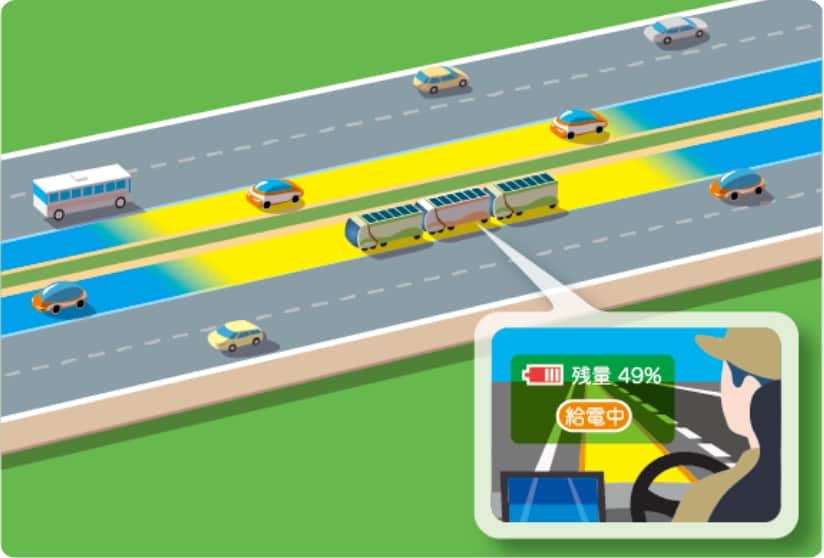
Power supply while driving
We will develop lanes that can wirelessly charge electric vehicles while they are traveling on Expressway. By building these lanes on lanes dedicated to autonomous driving, there will be no misalignment and more efficient power supply will be possible. In addition, the system will determine the level of battery power remaining in the vehicle and select vehicles to be powered from the limited power grid. This will further extend the driving range of electric vehicles, making driving on Expressway in an electric vehicle even more comfortable.





 RECRUIT