Resilient Expressway
- Corporate Top
- Sustainability
- Contribution to the local community
- Resilient Expressway
Resilient Expressway Initiatives
We will prepare for large-scale earthquakes and disasters caused by climate change (increasingly severe and frequent typhoons, heavy rains, and heavy snowfall), and quickly restore Expressway after damage. NEXCO EAST Group 's response and adaptability will support a disaster-resistant Expressway network.
Disaster free Expressway network
Even if a part of the Expressway is closed in the event of a disaster, securing the function of the surrounding Expressway will support the flow of people and logistics, and prevent the deterioration of transport functions. In addition, we will support the early recovery of the disaster area.
Construction business
By steadily developing Expressway network, we will ensure alternative routes in the event of a disaster, provide safe, secure, comfortable and convenient Expressway services, and contribute to improving the lives of local communities.
Eliminating missing links (uncompleted sections of road)
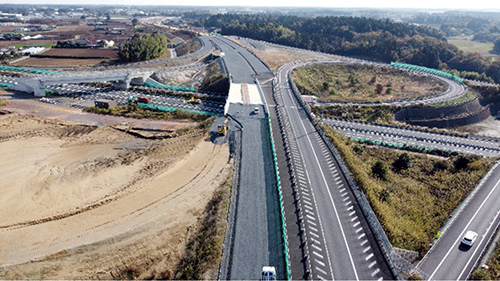
We are working to eliminate missing links, primarily in the Tokyo metropolitan area. This is expected to reduce travel times, revitalize local economies, and serve as an emergency transportation route in the event of a disaster. In the Tokyo metropolitan area, the opening of Ken-O Road between Sakai-Furukawa IC and Tsukuba-Chuo IC (2017) and the Tokyo Outer Ring Road between Misato Minami IC and Takaya JCT (2018) has connected Kan-Etsu Expressway to the Higashi-Kanto Expressway via multiple routes, improving convenience. We are currently working on the construction of Ken-O Road and the Tokyo Outer Ring Road. Eliminating missing links is expected to reduce travel times, revitalize local economies, and serve as an emergency transportation route in the event of a disaster.
4-lane provisional 2-lane section
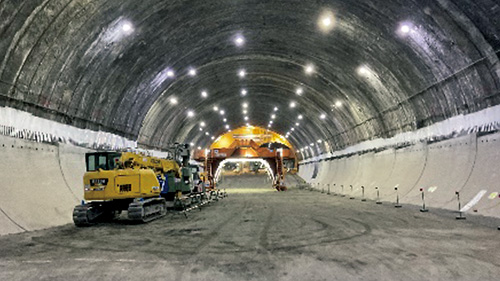
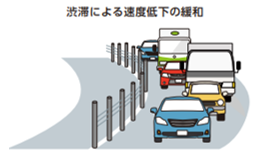
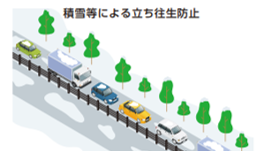
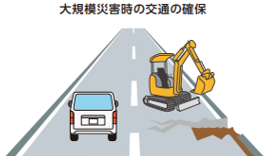
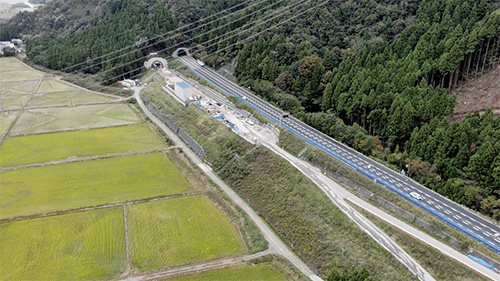
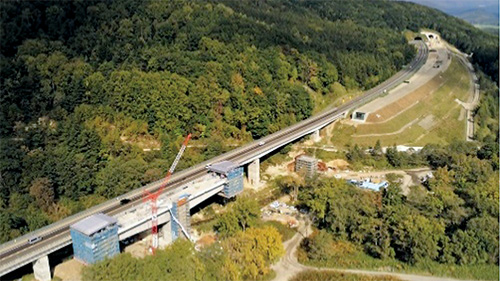
We are systematically expanding the road to four lanes from the perspective of ensuring time reliability, preventing accidents, and ensuring alternative network features. Expanding to four lanes is expected to eliminate and alleviate congestion, prevent serious accidents such as vehicles running into the opposite lane, and reduce road closures due to maintenance and repair work or accidents. In addition, because it will also help ensure time reliability and ensure traffic functions during disasters and heavy snowfall, we are systematically expanding to four lanes and working to improve functionality for safety and security.
Smart IC installation
In order to make effective use of existing Expressway and promote the enrichment of local life and the revitalization of local economies, we are promoting the construction of smart ICs in various regions that can be introduced at low cost and limit access to ETC-equipped vehicles only.
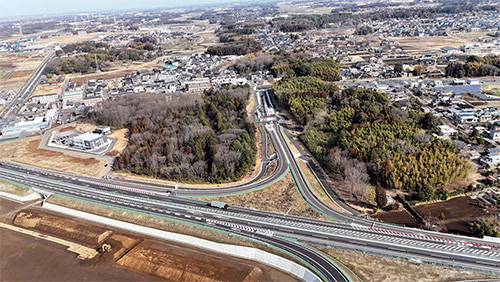
Ken-O Road Tsukuba Nishi Smart IC
Examples of initiatives
Maximizing network effects
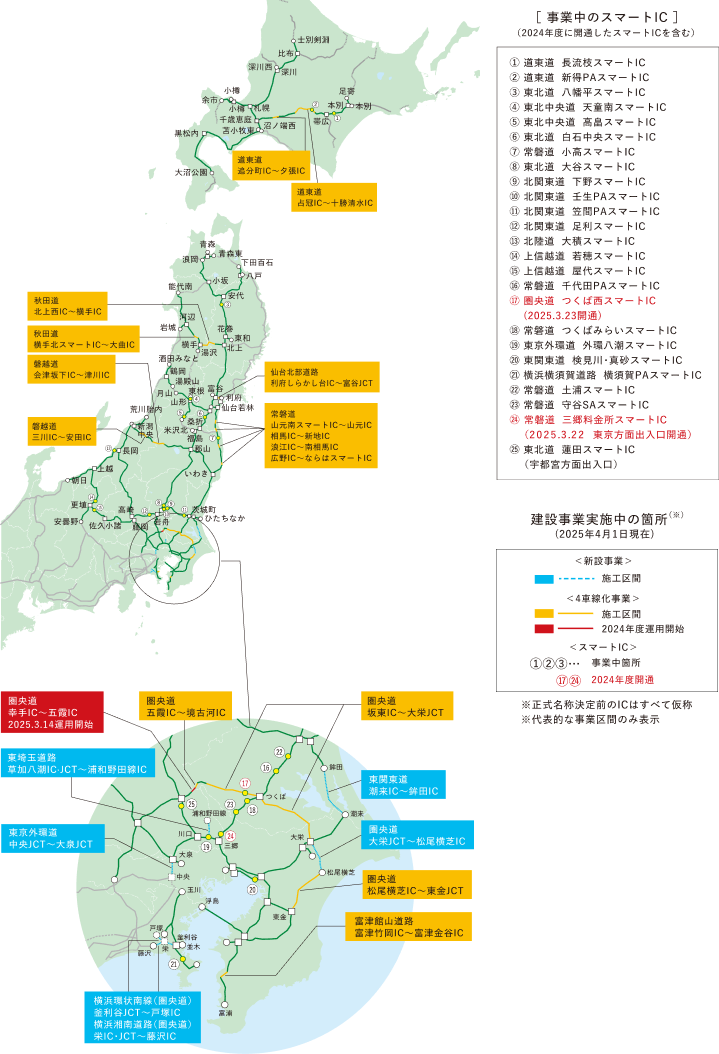
| Construction of new sections | 84.7km |
|---|---|
| 4-lane provisional 2-lane section | 231.2km |
Disaster prevention work plan and implementation of disaster prevention work
To protect Expressway from disasters such as Expressway and to fulfill their social role, we have established a Disaster Prevention Work Plan and detailed rules for implementing it. Based on this, we are collecting and providing information in the event of a disaster through the development of information systems and the operation of Hakofuta, as well as ensuring safety and carrying out restoration work. *Disaster Prevention Work Plan・ NEXCO EAST Japan, a designated public institution under the Disaster Countermeasures Basic Act, has published a Disaster Prevention Work Plan aimed at building disaster-resistant roads.
Disaster prevention work plan / national protection work planDisaster prevention operations overview
- Disaster prevention system and emergency gathering
- Securing emergency road functions, etc.
- Passage traffic regulations
- Disaster drills and in-house training
- Support cooperation system
- Prepare for disaster
- Information collection contact system
- PR activities
emergency training
To ensure the safety and security of our customers on Expressway, NEXCO EAST conducts emergency headquarters operation training in the event of an accident or disaster, as well as practical training in cooperation with related organizations. The photo on the right shows a comprehensive disaster prevention training exercise held at the Kan-etsu Tunnel on Kan-Etsu Expressway on October 6, 2011.

Other post-opening improvements
Lifesaving support
In order to support emergency lifesaving activities in the event of a disaster, we have established a lifesaving support helipad and conduct training with related organizations.
Maintenance of lifesaving support heliport
To ensure the rapid transport of injured people and the implementation of swift disaster response measures in the event of a disaster, we have established "lifesaving support heliports" for helicopter takeoffs and landings at 15 service areas in Hokkaido, Miyagi, Fukushima, Gunma, and other prefectures, and we also conduct takeoff and landing training within the toll gate grounds.
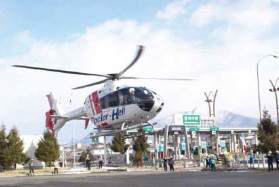
(Joshinetsu Expressway Shinshu Nakano IC)