Earthquake response
- Corporate Top
- Sustainability
- Contribution to the local community
- Resilient Expressway
- Earthquake response
- Resilient Expressway Page
Disaster preparedness
Minimize damage and quickly restore Expressway functionality
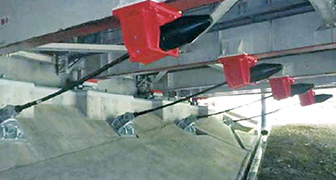
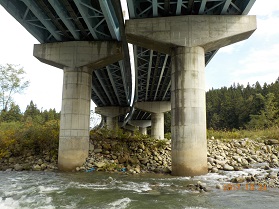
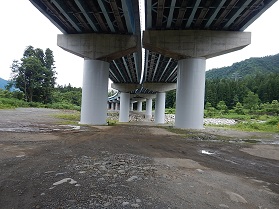
To prevent bridges and elevated sections from collapsing, bridge girders from shifting, and road surfaces from becoming uneven due to earthquakes, bridge piers are reinforced and devices are installed to prevent bridges from collapsing. In particular, in areas where the probability of a large-scale earthquake occurring is above a certain level, measures are being accelerated based on the "Expressway Earthquake Reinforcement Implementation Plan."
Bridge collapse prevention device (example)
For details on the "Expressway Earthquake Reinforcement Implementation Plan (January 13, 2024)," click here.
https://www.e-nexco.co.jp/news/cms_assets/news/2024/01/13/02.pdf
Seismic retrofitting
Measures to prevent the bridge from collapsing or collapsing in the event of a large-scale earthquake have been completed, but seismic reinforcement work is also underway to quickly ensure its function as an emergency transportation road.
Progress of earthquake-resistance reinforcement (East Japan) [PDF: 585KB]
Securing "roads of life" through prompt inspections and restoration work immediately after the earthquake
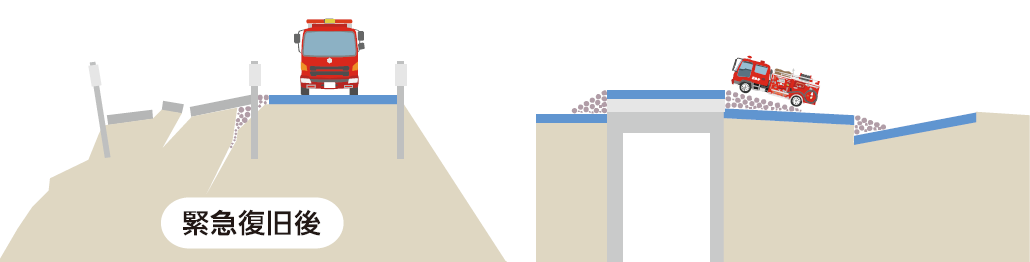
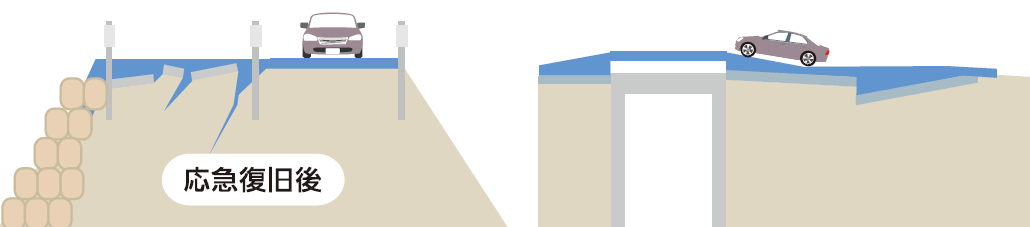
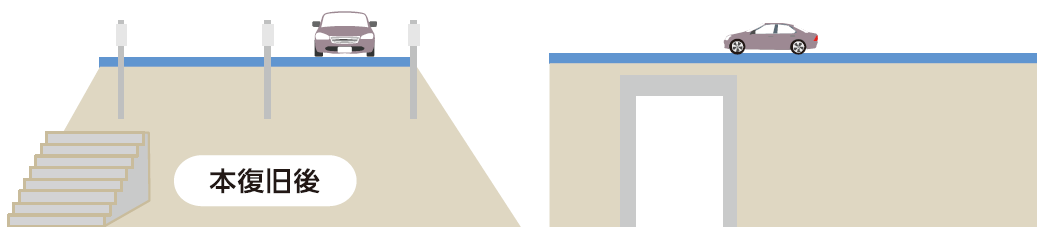
In order to fulfill its role as a "Road of Life" for transporting emergency vehicles and relief supplies to disaster-stricken areas, road restoration will be carried out in three stages (emergency restoration, temporary restoration, and full restoration). The goal of emergency restoration, which allows emergency vehicles to pass, is to be completed within approximately 24 hours of the disaster, while temporary restoration, which allows general vehicles to pass with restrictions, is to be completed within seven days of the disaster.
[STEP 1] Emergency recovery (approximately 24 hours later)
Secure the passage of emergency vehicles by using sandbags, etc.
[STEP 2] Emergency recovery (approximately 7 days later)
Ensure road surface levels that allow general vehicles to travel safely with restrictions
[STEP 3] Full recovery
Ensuring road surfaces with the service level that is inherent to Expressway
(The time in red is the approximate time from the occurrence of the earthquake.)
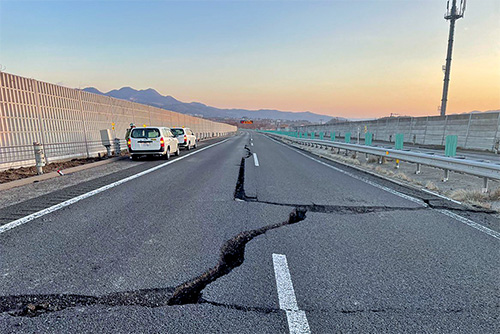
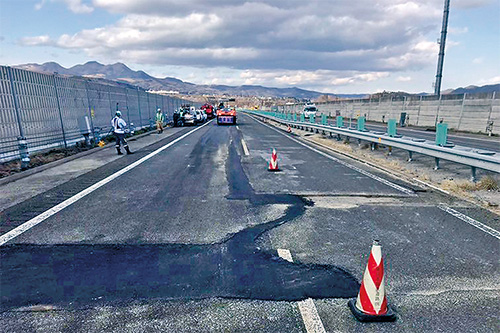
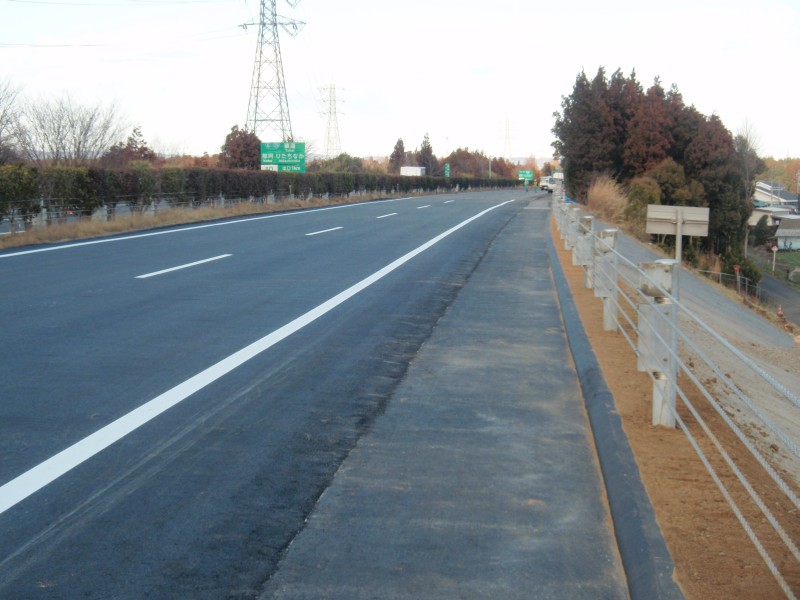
Examples of embankment and road surface restoration
(Tohoku Expressway Expressway between Kunimi IC and Shiroishi IC)
(Road closures were lifted 16 hours after the disaster)
Development of SAs and PAs with disaster prevention functions - In preparation for an earthquake directly beneath the capital
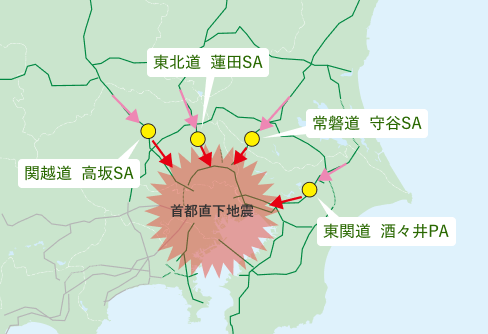
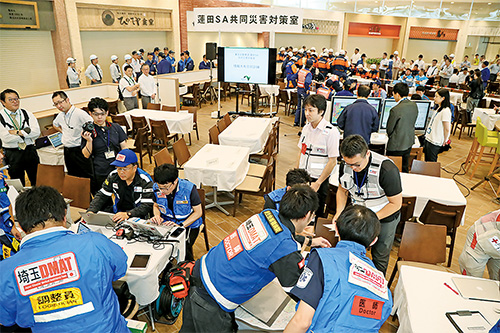
In preparation for disaster response, we have established "disaster prevention function reinforcement areas (wells, heliports, disaster prevention stockpiles, private generators, and increased oil tank capacity)" in accordance with the "Eight-Direction Operation," a road clearance plan for the Greater Tokyo Area in the event of an earthquake directly beneath the capital, with the expectation that they will be used by police, fire departments, the Self-Defense Forces, and DMAT (Disaster Medical Assistance Team).
(Tohoku Expressway Hasuda SA In-bound))
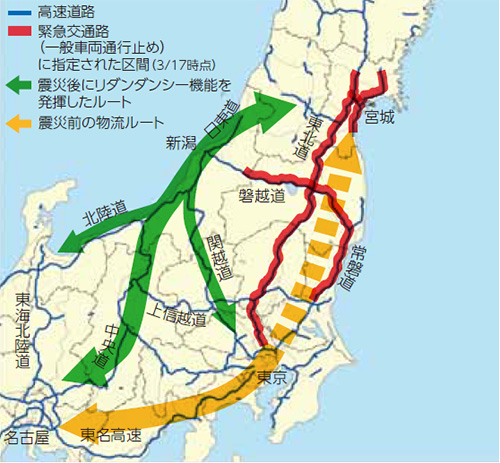
Even if a part of the Expressway is closed in the event of a disaster, securing the function of the surrounding Expressway will support the flow of people and logistics, and prevent the deterioration of transport functions. In addition, we will support the early recovery of the disaster area.
Cases of restoration activities after the Great East Japan Earthquake
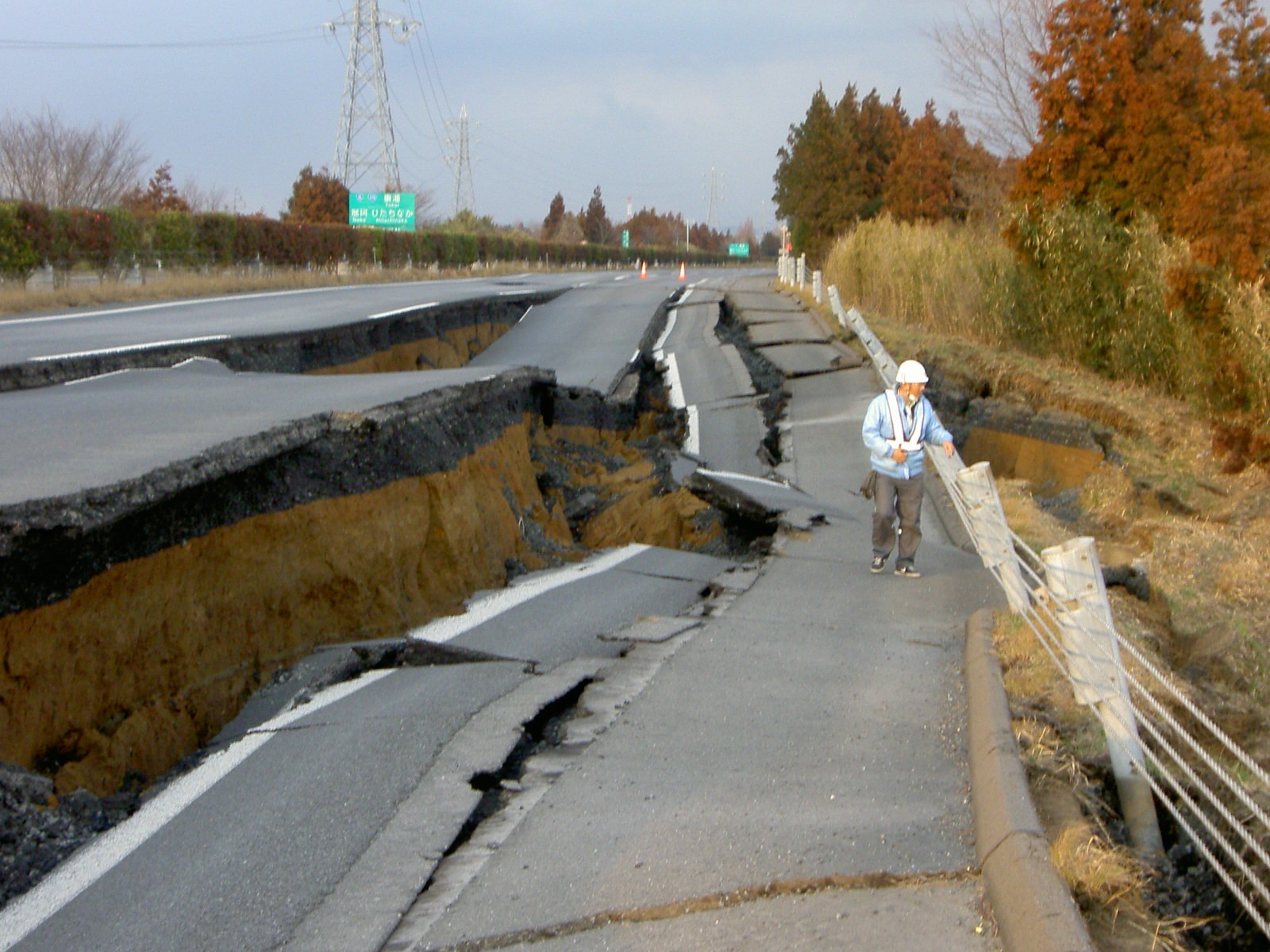
The Great East Japan Earthquake that occurred on March 11, 2011 caused many damages on the Tohoku Expressway and Joban Expressway including cracks and bumps on the road surface, collapse of embankments, and breakage of expansion and contraction equipment. Immediately after the earthquake, we closed the road for about 2,300 km and carried out emergency inspections and temporary restoration. On the next day, we secured emergency traffic, and 13 days later, almost all lines were closed.
Joban Expressway Mito IC-Naka IC Restoration status of embankment collapse point