Reducing environmental impact and biodiversity
- Corporate Top
- Sustainability
- ESG Initiatives
- environment
- Reducing environmental impact and biodiversity
Reduction of environmental load
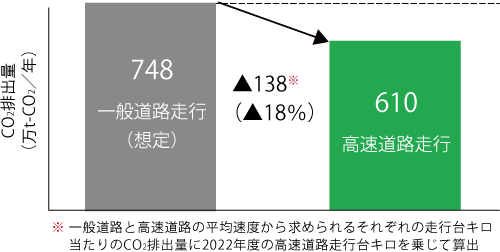
Reducing CO₂ emissions through network development
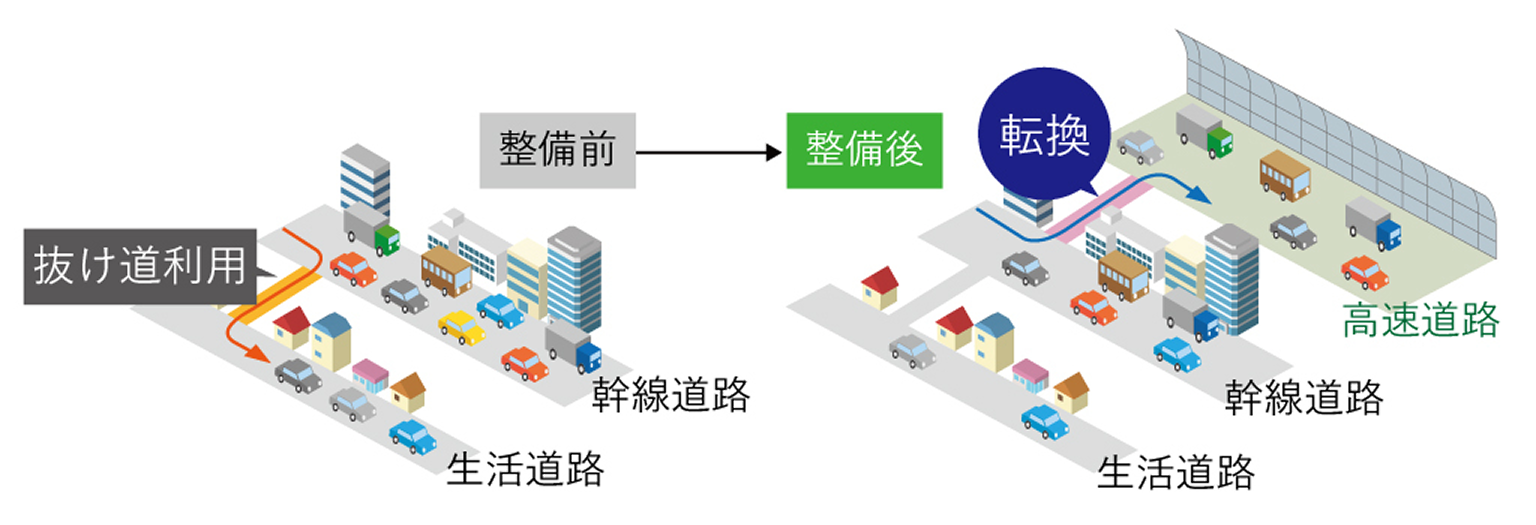
Using Expressway allows for stable speed travel, resulting in reduced CO₂ emissions compared to using ordinary roads. In addition, a shift from road traffic to Expressway can be expected, leading to smoother traffic on ordinary roads, which in turn can reduce emissions. In this way, Expressway network contributes to reducing CO₂ emissions by facilitating smoother traffic.
Noise and landscape measures
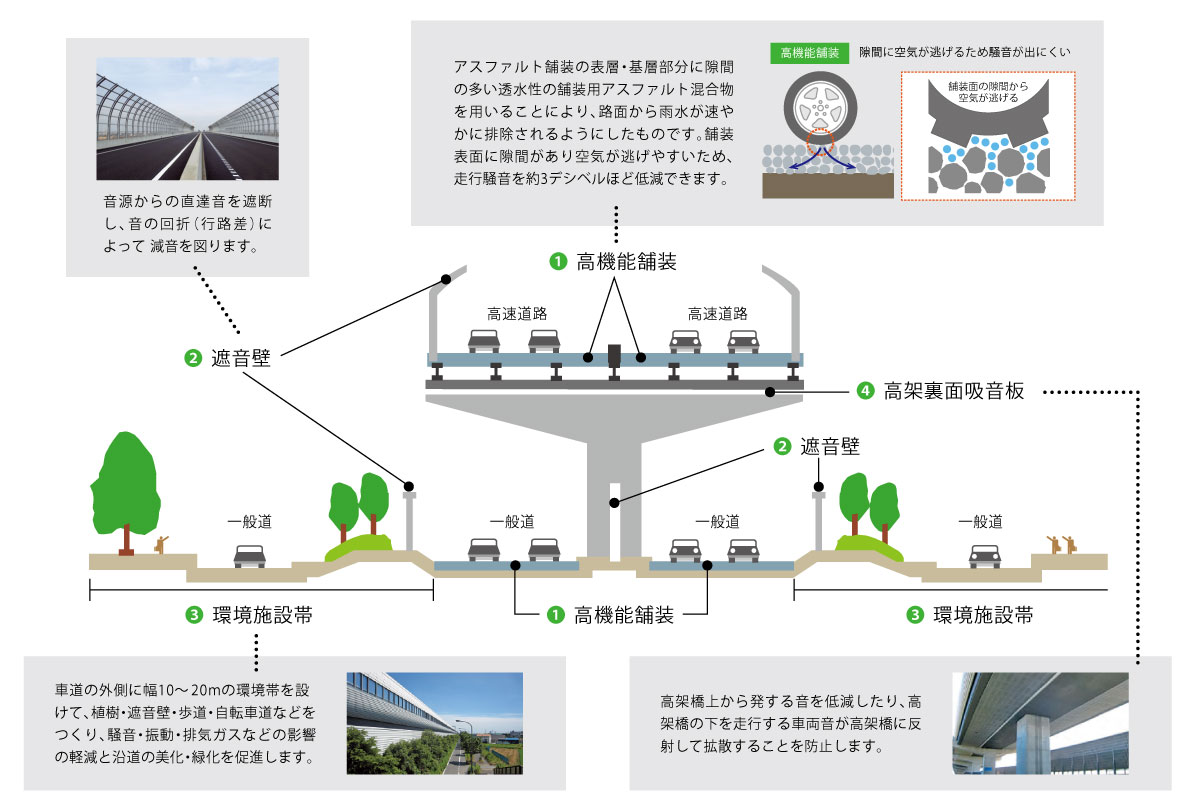
In order to reduce the impact on the roadside environment, measures such as installing noise barriers and developing environmental facility zones are being implemented.
Creating natural environments and preserving biodiversity
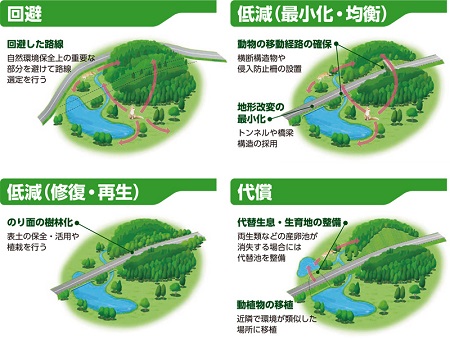
We are working on "eco-road" (road construction that takes the natural environment into consideration) initiatives to conserve local biodiversity and maintain a healthy ecosystem.
Creating a natural environment
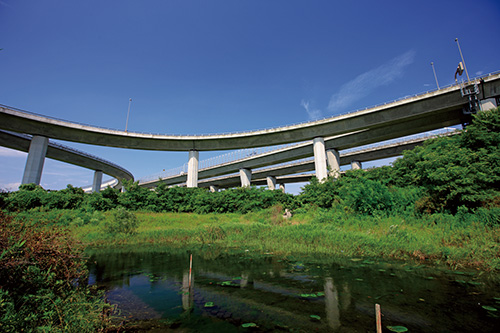
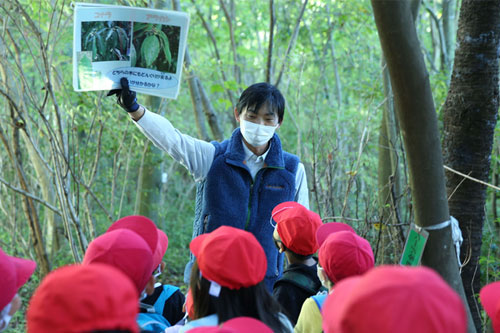
As part of our efforts to advance construction projects in harmony with the natural environment, we are creating natural environments such as waterfronts, wetlands, grasslands, shrub forests, and tall tree forests in conjunction with the construction of the interchange, and are developing a "biotope" to restore the natural environment of the vegetation, flora, and fauna that existed before the interchange was built. Twenty years have passed since the initial construction of the biotope at Ken-O Road Akino Interchange (operational since March 2005), and as of the end of fiscal year 2023, a wide variety of flora and fauna (approximately 530 species), including raccoon dogs, yellow damselflies, and Japanese sea bass, are confirmed to be living there. Furthermore, as part of the Hokkaido City initiative, the biotope also provides opportunities for people to experience nature, such as through hands-on learning sessions for local elementary school students and collaborative conservation work with local residents, experts, and local high school students.
Maintaining the habitat and home range of living organisms
When Expressway is built, the habitats and home ranges of living creatures are divided, which can have a major impact on the ecosystem, such as eliminating routes to water and feeding grounds and losing genetic diversity. Therefore, as part of an ecosystem conservation initiative, the "Mobara Animal Bridge" on Ken-O Road involves installing a tunnel over the open road and planting trees on top to connect the surrounding forests. This avoids dividing living creatures' habitats and home ranges and allows animals to move between the surrounding forests while hiding. Raccoon dogs, wild boars, and other animals have been spotted crossing this bridge. This initiative also helps reduce roadkill, which occurs when animals invade Expressway and collide with moving vehicles.
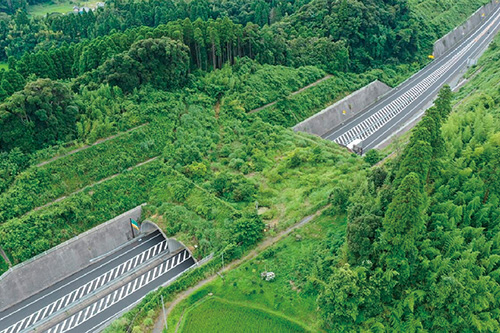
Ken-O Road also rose - Animal Bridge
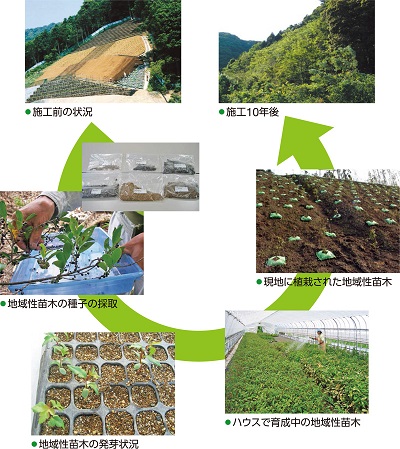
We will mitigate the impact on the natural environment and promote natural restoration by local seedlings.
We will endeavor to reduce the environmental burden at all stages of our business activities.